Introduction: onboarding starts before the first tile is placed
We already covered the complexity Forge of Empires has stacked up over twelve years. This time we go earlier: the very start, before the first hut goes down.
Three complementary guides each cover one layer: server choice, the first fifteen minutes of city management, the premium-currency temptation baked into the tutorial. Together they map an onboarding built from three decisions, each one irreversible once made.
Layer 1: picking a server and a world you can't undo
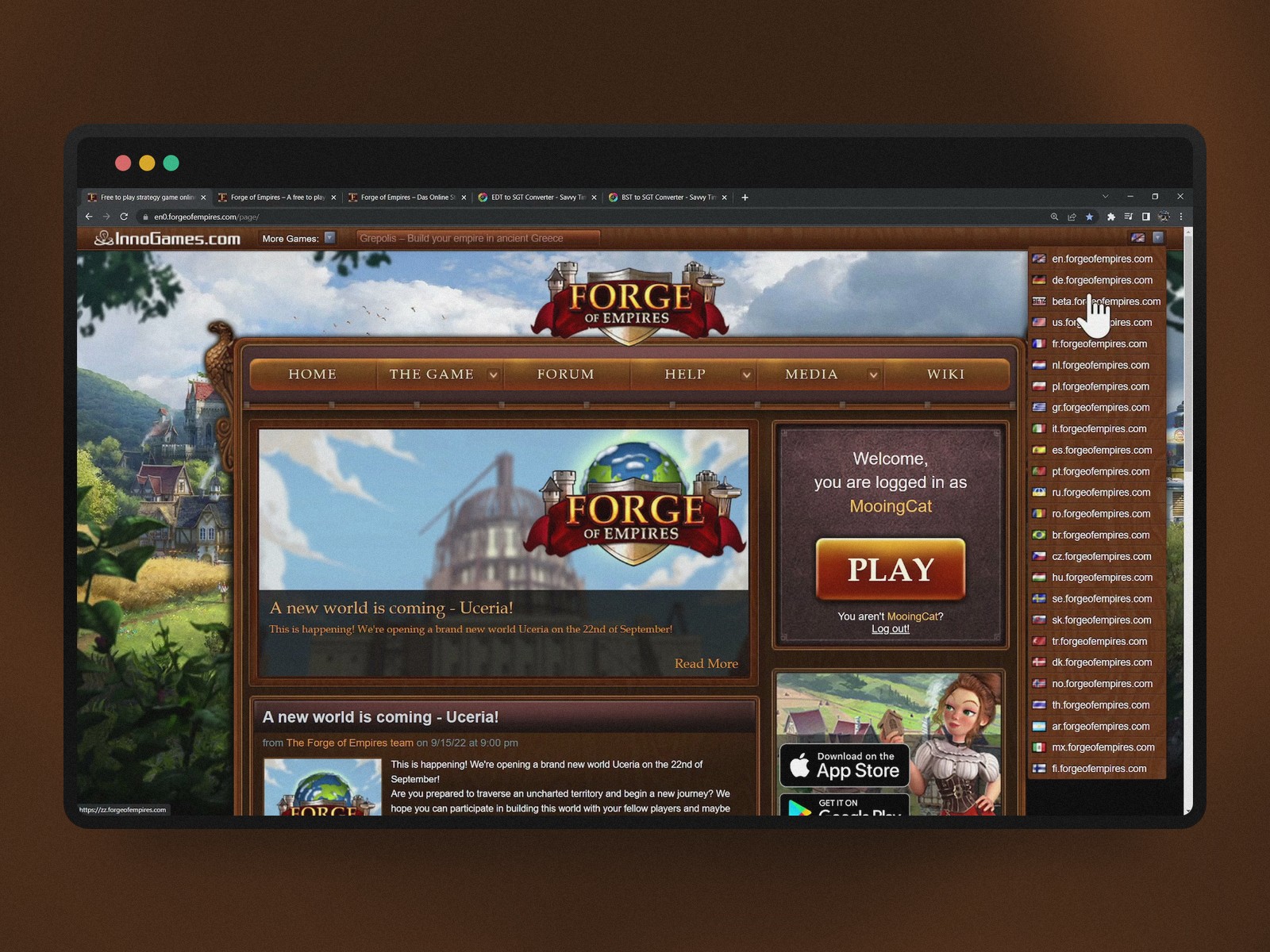
First observation: Forge of Empires doesn't just segment players by language preference. Each server (DE, EN, US, Beta…) maps to a real time zone, which decides when the daily activity spikes actually land.
Server codes that trap new players
The international server is labeled EN but runs on UK time. The Beta server hides behind the URL zz.forgeofempires.com, not the word "beta." Nothing in the interface explains either convention when the choice actually matters.
Worlds ranked alphabetically — a hierarchy nobody explains
Each server opens its worlds in alphabetical order: the first starts with A, the second with B. An older world (closer to A) means abundant resources and established players ready to help. A newer world (later in the alphabet), instead, guarantees an even playing field. None of this logic is written anywhere in the game — it lives entirely in community guides.
Diamonds, the one currency that crosses borders
The account is siloed by server: no transferring troops or buildings from one world to another. Only diamonds (the premium currency) follow the player across worlds on the same server. Switching servers, though, means starting from zero — a fact the interface never flags before the choice is confirmed.
Layer 2: the first fifteen minutes, between a forced tutorial and immediate optimization
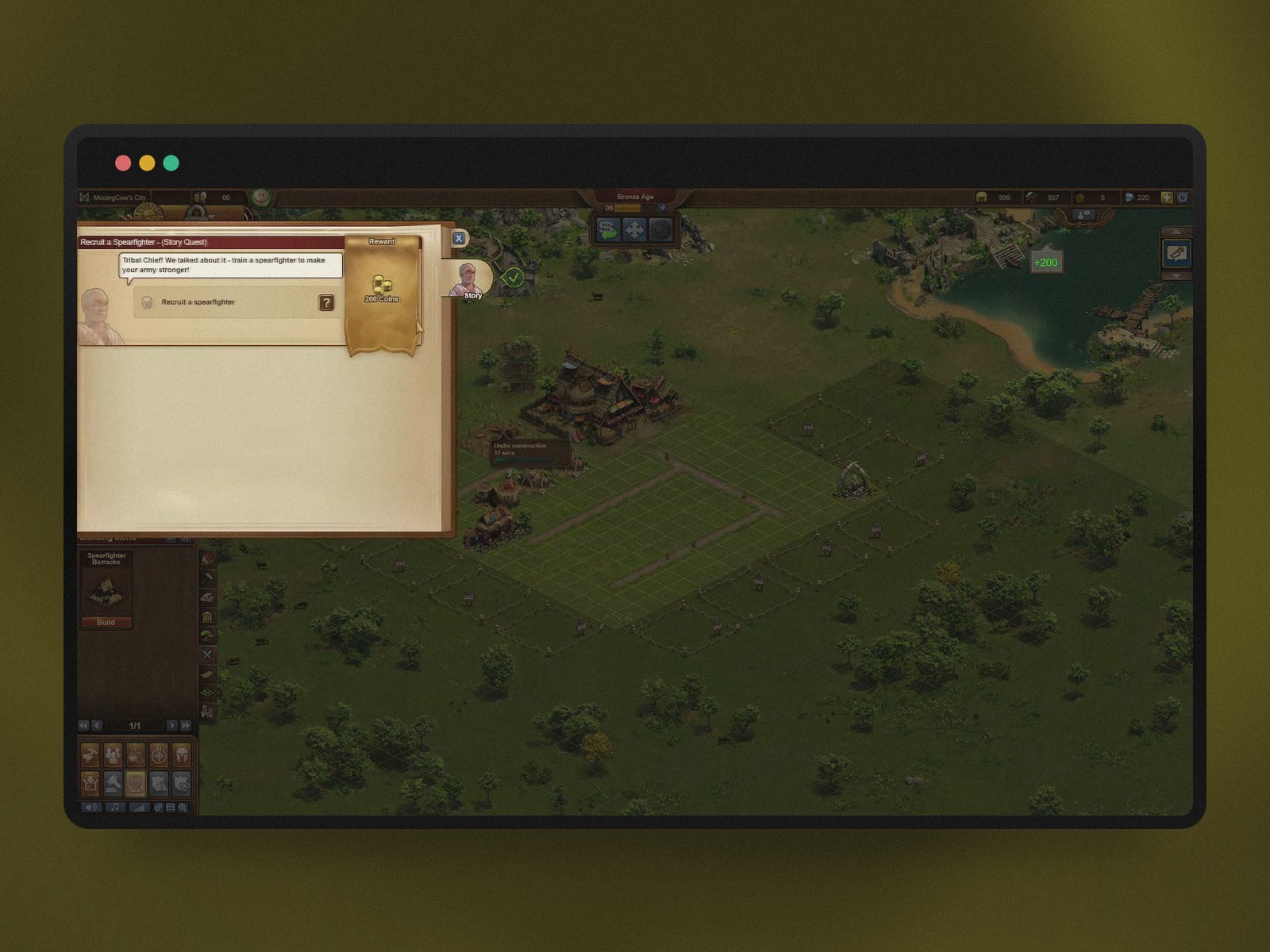
Once the world is picked, the game runs a linear tutorial. Experienced players work around it almost immediately to rebuild their city on more efficient logic.
Tearing it all down to replan
The moment the tutorial ends, the observed practice is to undo everything. Players remove the default roads and move the Town Hall to one edge of the map, freeing up a more usable central space. It's a drastic move that no screen in the game ever suggests.
Ignoring the game's own building suggestions
The tutorial pushes toward Stilt Houses. Seasoned players prefer Huts and Hunters instead, which yield more during active sessions. The game never ranks these options against each other — it offers one path, without ever comparing its real cost to the alternatives. A new player following the default suggestions has no way of knowing they're leaving yield on the table. That comparison only exists in third-party spreadsheets and community guides — never in the build menu itself.
Barracks and the trap of non-replaceable units
From the first combat quests onward, one technical detail changes everything. So-called "unattached" units can't be replaced if they fall in battle. Nothing in the battle interface visually distinguishes them from ordinary barracks troops, which can be sacrificed without lasting consequences. The distinction only becomes obvious the first time a veteran unit is lost for good. By then, the lesson has already cost a real setback instead of a five-second warning.
Layer 3: the diamond temptation, right from the tutorial
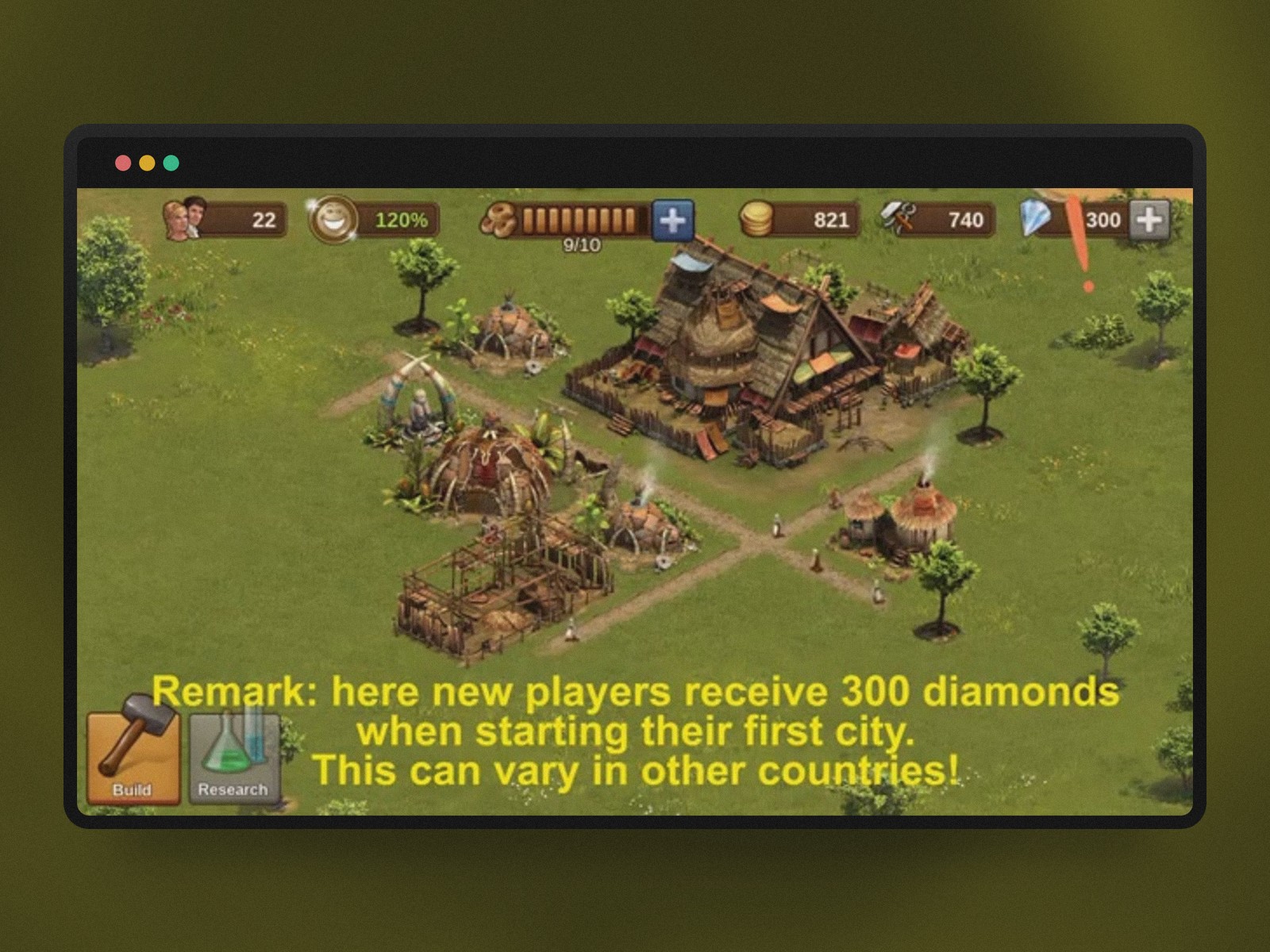
The third guide documents a pattern common to the genre. Within the first few minutes, the game offers paid shortcuts — premium buildings, extra training slots. The player has no way yet to judge whether they're worth the cost.
The Langhaus: an investment that doesn't pay off this early
The premium Langhaus building promises an immediate population boost for diamonds. Measured against standard housing, the return doesn't justify the spend. No purchase screen shows that math — hiding it is exactly the point.
Saving for territorial expansion instead of speed
The advice that shows up across all three guides: save your diamonds for land expansions, the one investment that stays worthwhile long-term. Premium slots and buildings, by contrast, see their effect fade within a few hours of play.
What Dynasty Nova does differently from minute one
I'm building Dynasty Nova, a browser-based space management game. In our own first three minutes of gameplay, every decision screen (universe, speed, match length) surfaces the information that matters upfront. It's never left for a third-party guide to explain.
On monetization, the gap is direct: we chose a Pay-to-Fast approach rather than Pay-to-Win. That's the opposite of a premium shortcut offered during the tutorial, before the player even knows if they need it. And for the genre as a whole, we've documented elsewhere what separates a good PBBG onboarding in 2026 from one that merely exists.
Conclusion: three layers, three missed chances to guide the player
Server, city, diamonds: three structural decisions, all made within the first fifteen minutes of Forge of Empires. Three times, the interface leaves the explaining to outside guides instead of doing it in the moment.
That's not a fatality of the genre. Twelve years of accumulated systems can explain why the gaps exist. They don't excuse leaving new players to fend for themselves through their first quarter-hour. It's a design choice that can be made differently — which is exactly the bet we keep making on Dynasty Nova, screen after screen.