
Introduction
In a management game like Dynasty Nova, the shop is the screen players trust the least. It's also the one that has to prove, at a glance, a simple promise: here, you pay to move faster, never to gain an edge others can never catch up to.
Why Pay-to-Win kills trust
AN EDGE NO ONE ELSE CAN CATCH UP TO
Pay-to-Win means selling power that free players can never reach, no matter how long they play. In a strategy game where players compete indirectly, that imbalance breaks the very point of competing.
PAY-TO-FAST: SAME RESULT, JUST SOONER
Pay-to-Fast follows a different rule: anything purchased, a free player can also earn, simply by playing longer. Money buys time, never an unreachable ceiling.
How the interface carries that promise
PUTTING THE FREE OPTION ON THE SAME LEVEL AS PAID PACKS
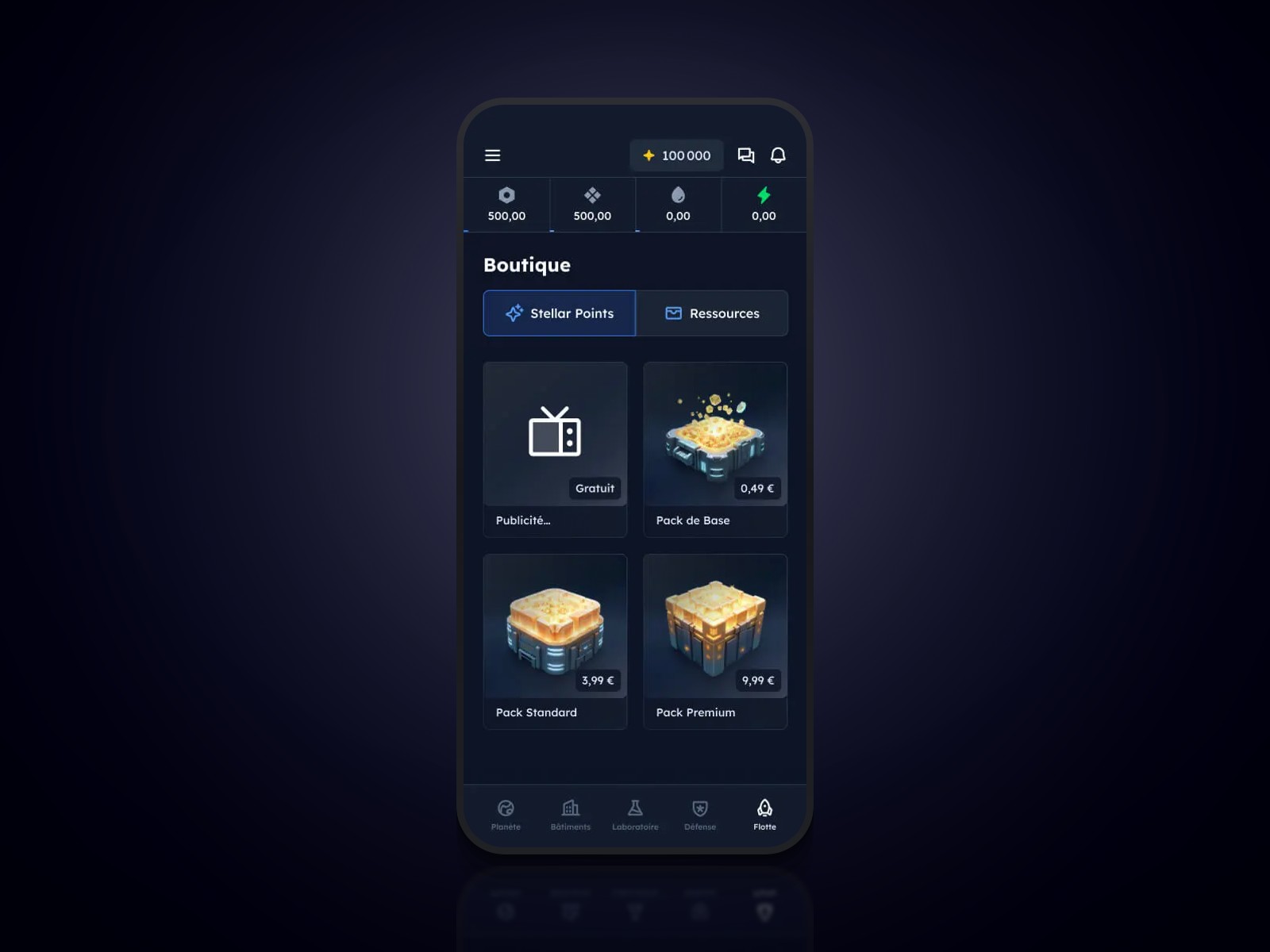
In Dynasty Nova's shop, the "rewarded ad" option sits in the same grid as the paid packs, at the same size, not buried at the bottom of the page. The visual message is clear: this isn't a second-choice option, it's a real alternative.
SEPARATING WHAT'S BOUGHT FROM WHAT'S EARNED
The shop splits into two tabs: "Stellar Points" (the premium currency) and "Resources" (what every player produces by playing). This separation makes it structurally visible that real money and playtime lead to different kinds of rewards, not a shortcut to winning.
COSMETICS AS RISK-FREE MONETIZATION
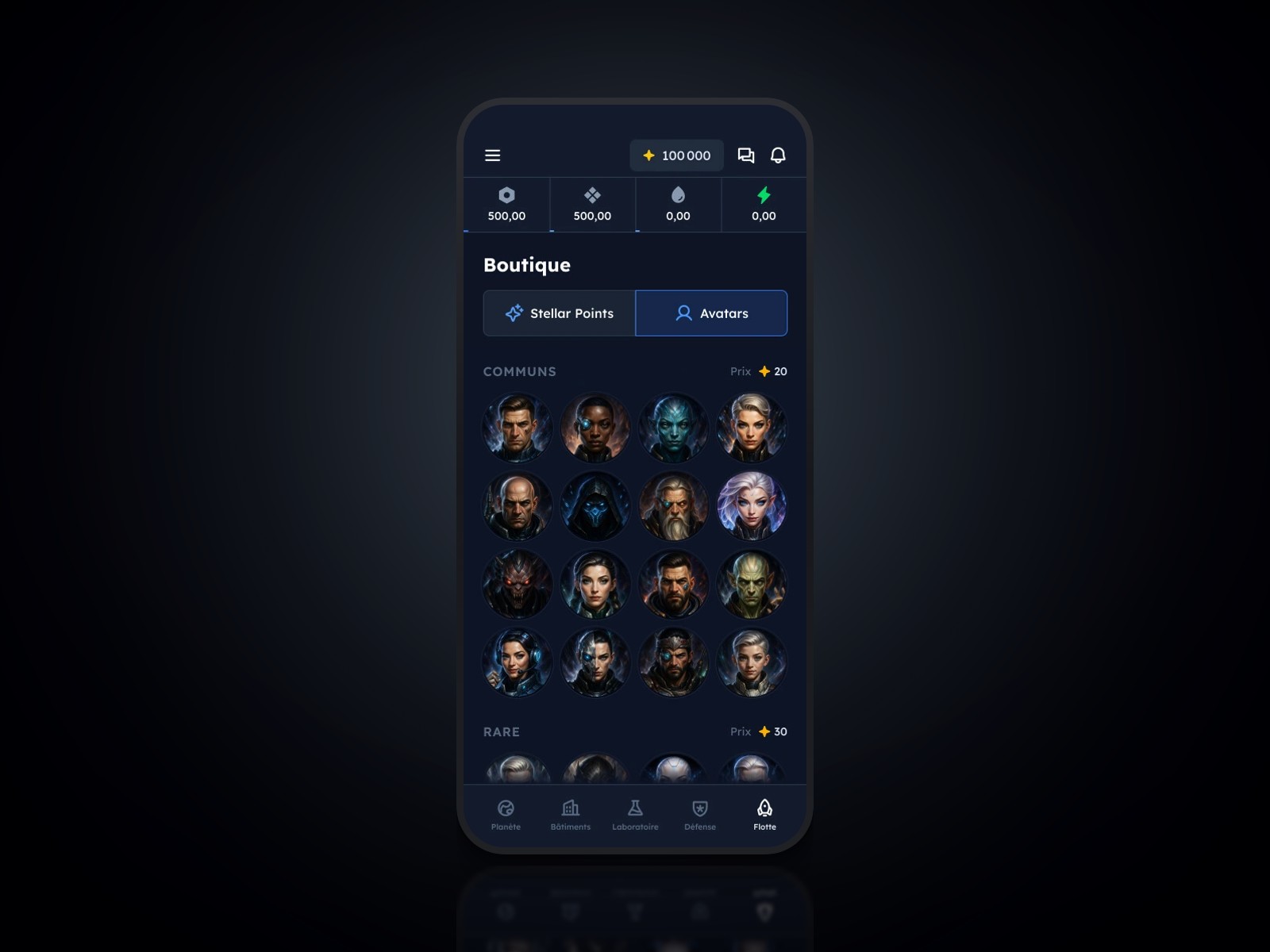
Customizable avatars illustrate a third path: purely cosmetic monetization, organized by rarity tiers (common, rare…), that touches no game mechanic at all. It's the kind of purchase that never puts fairness into question, since it changes nothing about the match itself.
The real test: burden of proof
A "Pay-to-Fast, never Pay-to-Win" pledge written in marketing copy convinces no one if the interface tells a different story. Trust is built in the shop's design itself: what's highlighted, what's free, what stays reachable without spending a cent.
Conclusion
In Dynasty Nova, monetization isn't just an economic rule — it's an interface design question. A shop that clearly surfaces its free options, separates time from power, and confines real money to cosmetics builds a trust no pledge can replace.
FURTHER READING
Play Dynasty Nova
Dynasty Nova: Rethinking the Tech Tree of a Space Management Game
OGame Mobile: A Sacrificed UX? A Critical Look at a Nostalgic Interface
Assessing Design Maturity in Your Company