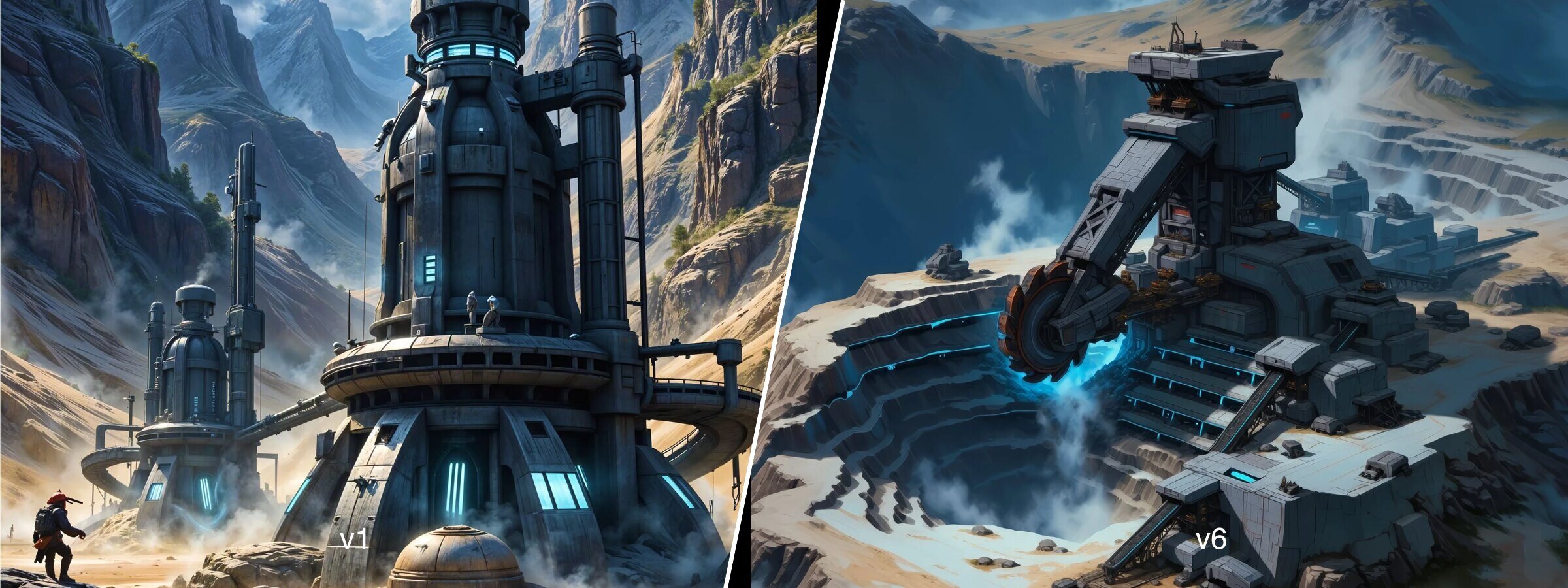
Introduction: a genre people keep declaring dead
OGame is twenty years old. Ikariam, Forge of Empires, and a dozen other browser-based management games are still running, with hundreds of thousands of active players. And yet, every year, someone writes that the genre is dead.
It isn't. It just changed shape: less Flash, more HTML5. And a generation of players looking for slower, more deliberate sessions than a typical mobile game. We've published several analyses of this comeback — this article ties them into a single reading grid.
What is a browser game (PBBG)?
A PBBG (Persistent Browser-Based Game) is played from a simple link, with no install, and keeps progressing even while you're offline — building, research, production. The browser replaces the heavy client, and persistence replaces the session.
Three families dominate the genre: space 4X (OGame and its offshoots), historical city-builders (Forge of Empires, Ikariam), and text-based diplomacy games (Politics & War). Each has its own interface traps.
The genre traces back to the early 2000s, when German publisher Gameforge launched the first pure-HTML management games, with no client to download. OGame (2002) and Ikariam (2008) are its two best-known survivors. Twenty years later, their interface has barely changed. Player expectations, on the other hand, have shifted a lot — that's exactly the gap this reading grid tries to measure.
The UX reading grid for a good browser game
We've analyzed about a dozen games in the genre for this site. Four criteria come up again and again when a game succeeds — or fails — at staying readable.
Onboarding: the first minutes decide everything
A PBBG has a structural problem: it has to teach, in ten minutes, systems designed to last for months. Most games stop at the basic tutorial and leave the real strategy to community guides — we documented this in detail on Forge of Empires.
Good onboarding doesn't try to explain everything at once. It explains what's irreversible at the moment the player is about to do it, not in a generic tutorial beforehand.
Monetization: Pay-to-Fast versus Pay-to-Win
Monetization is the genre's most sensitive point. It can stay transparent — speeding up a wait — or become a hidden competitive edge that unlocks power free players can never reach. The difference shows the moment you compare two games side by side. In a Pay-to-Fast system, real money shortens a wait that's already reachable for free. In a Pay-to-Win system, it unlocks power no free player can ever match, even after months of play.
Complexity and the tech tree
Twelve years of stacked updates almost always end up producing a tech tree that's unreadable without an external spreadsheet. It's the number one symptom of a game that grew without ever reworking its core readability.
The signal to watch for is simple: has the community had to build its own spreadsheets and wikis to make up for what the interface doesn't show? If so, it's the interface that has a problem — not players being too demanding.
Mobile UX: the port that breaks everything
Many PBBGs were born on desktop and ported to mobile as an afterthought, with menus that don't fit a small screen and information density built for a mouse. We covered this problem in detail on OGame's mobile port.
Browser game families to know in 2026
The space 4X family remains the most crowded: OGame keeps fascinating players twenty years after launch. Several recent projects offer their own take on it — we rounded up five alternatives to OGame that keep the genre's spirit while modernizing the interface.
Historical city-builders (Forge of Empires, Ikariam) bet on immediate visual progress, at the cost of complexity that keeps growing without ever getting simpler. Text-based diplomacy games (Politics & War) do the opposite: almost no imagery, all text and negotiation between players.
For a broader selection with screenshots and direct links, our top 10 best browser games remains the up-to-date reference.
What's changing in the genre in 2026
Three shifts are clearly taking shape across the most active browser games this year.
Interfaces that adapt to the player, not the other way around
New entrants are testing contextual tutorials — a tooltip that only appears at the exact moment it's useful, rather than a fixed walkthrough at the start of the game. That's exactly the principle missing from the genre's oldest titles.
Mobile-desktop continuity is becoming a deciding factor
A player who starts on a computer and continues on the subway now expects the same information density on both. Games that still treat mobile as a "lite" version lose part of their most active audience — the players who log in several times a day.
Communities that shape the balancing
Discord has replaced the forum as the main channel for player feedback. Studios that listen fast — and fix a broken mechanic within weeks rather than months — keep their most engaged players. Those are the ones who spread the game by word of mouth more than advertising ever could.
Before you invest: five questions to ask
- Does the tutorial explain irreversible choices at the moment I make them, or only in one block at the start?
- Does monetization speed up my wait, or unlock power I can't reach for free?
- Do I need an external guide to understand the tech tree after one hour of play?
- Does the mobile interface offer the same actions as desktop, or only a stripped-down version?
- Is the community (Discord, forum) active, or does the game run on autopilot?
These five questions are enough to tell a well-made project apart from a game that will waste your time before losing you for good.
Conclusion: a genre that rewards patience
Browser games never needed impressive graphics to last. They need an interface that respects the player's time, from the first click to the hundredth hour of play. That's the one criterion that truly separates the classics still alive from the abandoned projects.
If one of these games tempts you, start with the first ten minutes — that's almost always where your desire to stay gets decided.