Introduction: From Retro to the PBBG Renaissance
In the early 2000s, OGame left its mark on the history of online video games. Playable from a simple browser, it offered a persistent universe where strategy, patience and cooperation mattered more than graphics. This concept, known as PBBG (Persistent Browser-Based Game), laid the foundations of a lasting genre.
Twenty years later, browser-based space games haven't disappeared. Better yet: they're back in force. In 2026, a new generation of creators — often coming from design and UX — is reinventing this format with clean interfaces, accessible mechanics and an aesthetic designed for modern screens.
Here are five titles that illustrate this renaissance, between retro heritage and visual sophistication.
1. DarkOrbit Reloaded: The Veteran Still in Orbit
A modernized classic
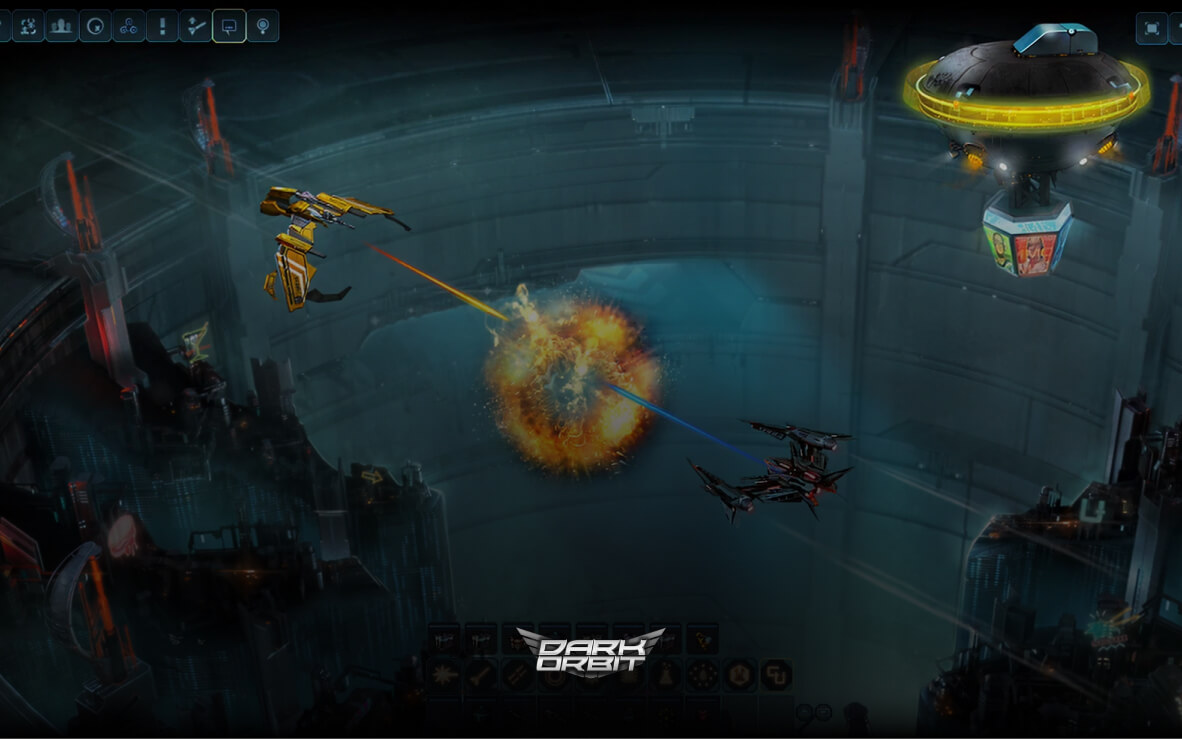
Launched shortly after OGame by Bigpoint, DarkOrbit was long its more fast-paced counterpart. The Reloaded version updated its graphics, refined the interface and added particle effects inspired by modern shoot'em ups.
Its DNA remains unchanged: conquest, endurance and immersion in a dark science-fiction universe.
UX/UI analysis
Visually, the game retains a strong "Flash era" identity: condensed typography, a dense but readable interface. The designers favored functional consistency over excessive modernization.
A key example of a retro interface that survives thanks to readability, contrast and information hierarchy.
2. Astro Empires: Textual Minimalism, Clarity Above All
A cerebral experience
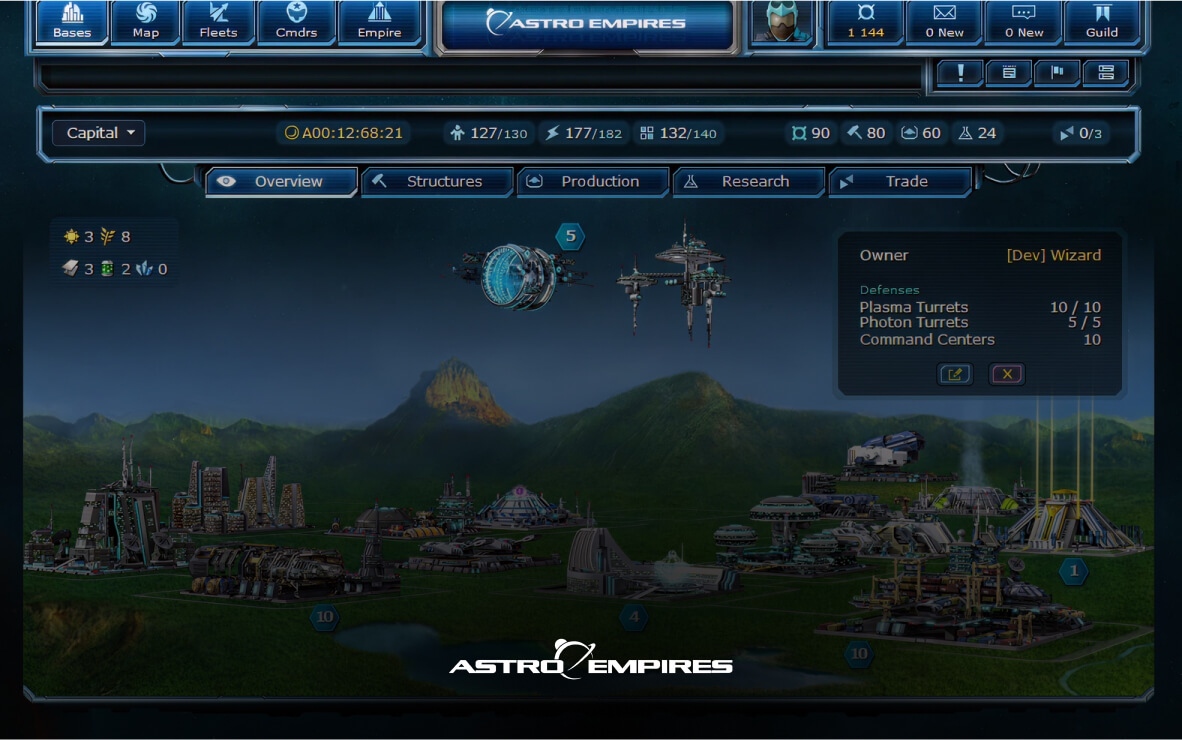
Released in OGame's shadow, Astro Empires is an ode to restraint. Here, there are no textures or animations: the gameplay relies on tables, statistics and a minimalist map.
It's an intellectual, almost meditative pleasure, where every piece of data has meaning.
Design and usability
Astro Empires embodies a radical approach to functional minimalism. The "spreadsheet" aesthetic may put off fans of visual effects, but it delivers an experience of absolute readability.
The absence of distraction reinforces strategic focus. It's a niche UX, but exemplary for its efficiency.
3. Starborne: Sovereign Space: The Ambition of the Space MMO
The PBBG on a galactic scale
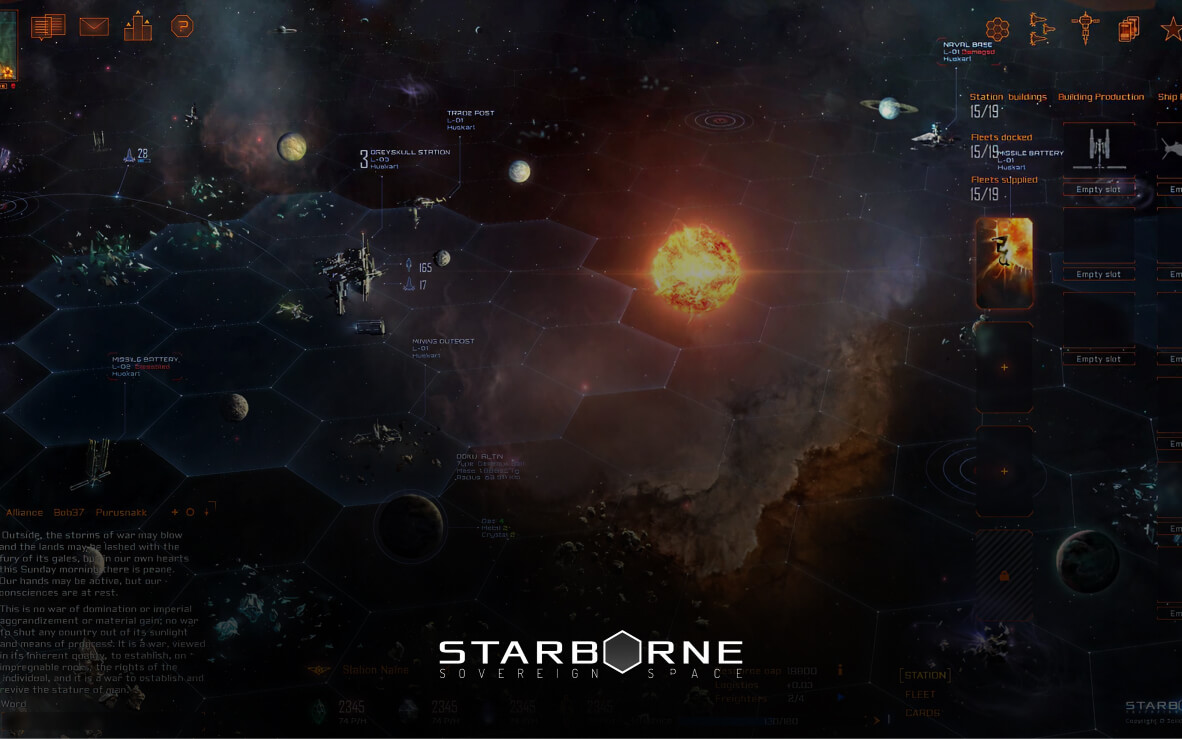
Starborne takes the concept to another level. With a 3D galactic map, dynamic alliances and a depth close to EVE Online, the game merges MMO and strategic management.
Its graphics engine and complexity make it a title of its own, closer to a full PC game than to the classic browser format.
UX/UI analysis
Starborne's interface is rich, sometimes too much so. Menus, overlays, indicators and pop-ups pile up, creating a cognitive overload effect.
However, the art direction — deep blue, transparencies, elegant typography — gives an impression of controlled visual consistency.
The UX challenge lies in the balance between aesthetic ambition and ease of use.
4. Vega Conflict: Design Put to the Cross-Platform Test
Hybrid gameplay
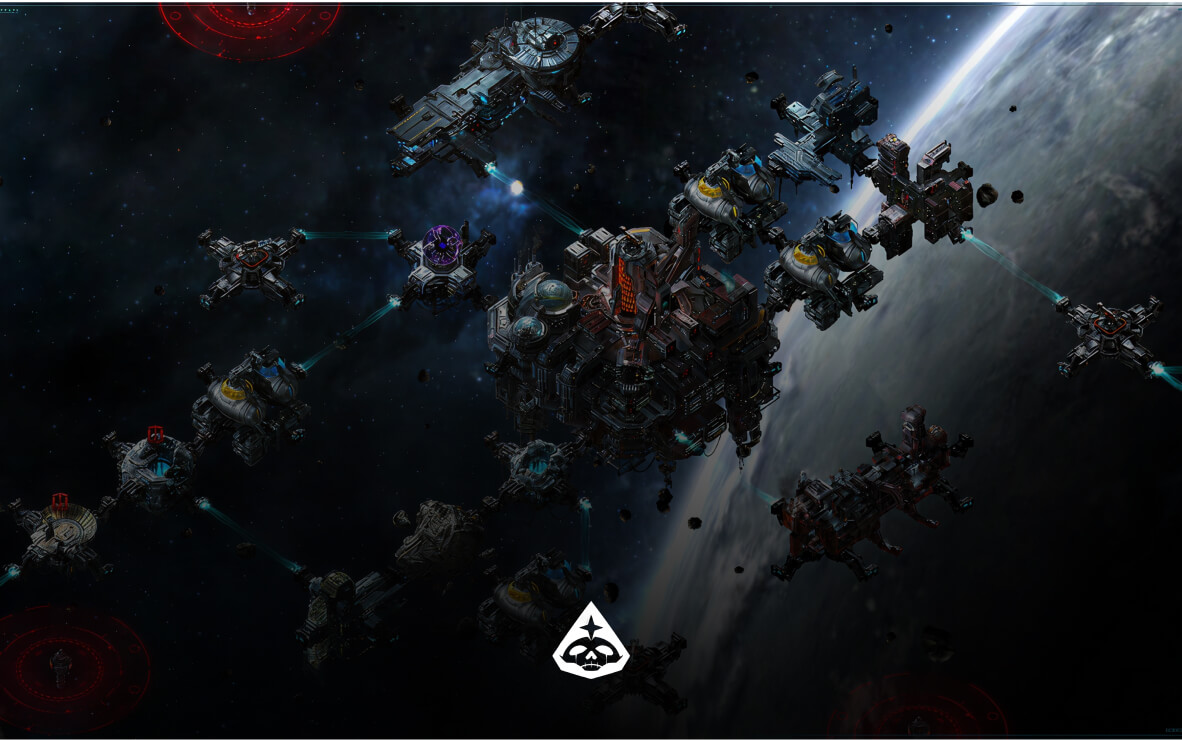
Born on the browser before being ported to mobile, Vega Conflict managed to blend real-time action and clan strategy. The result: an accessible, fast-paced game with a "Starcraft light" feel.
Cross-platform design
Graphically, Vega Conflict impresses: colorful explosions, detailed ships, icy atmospheres.
But its interface betrays its hybrid heritage. The oversized buttons and uneven contrasts reveal the limits of a design meant for two interaction logics: mouse and touch.
A lesson in visual consistency and adaptability in cross-platform design.
5. Dynasty Nova: The Design-First Revival
The future of the genre
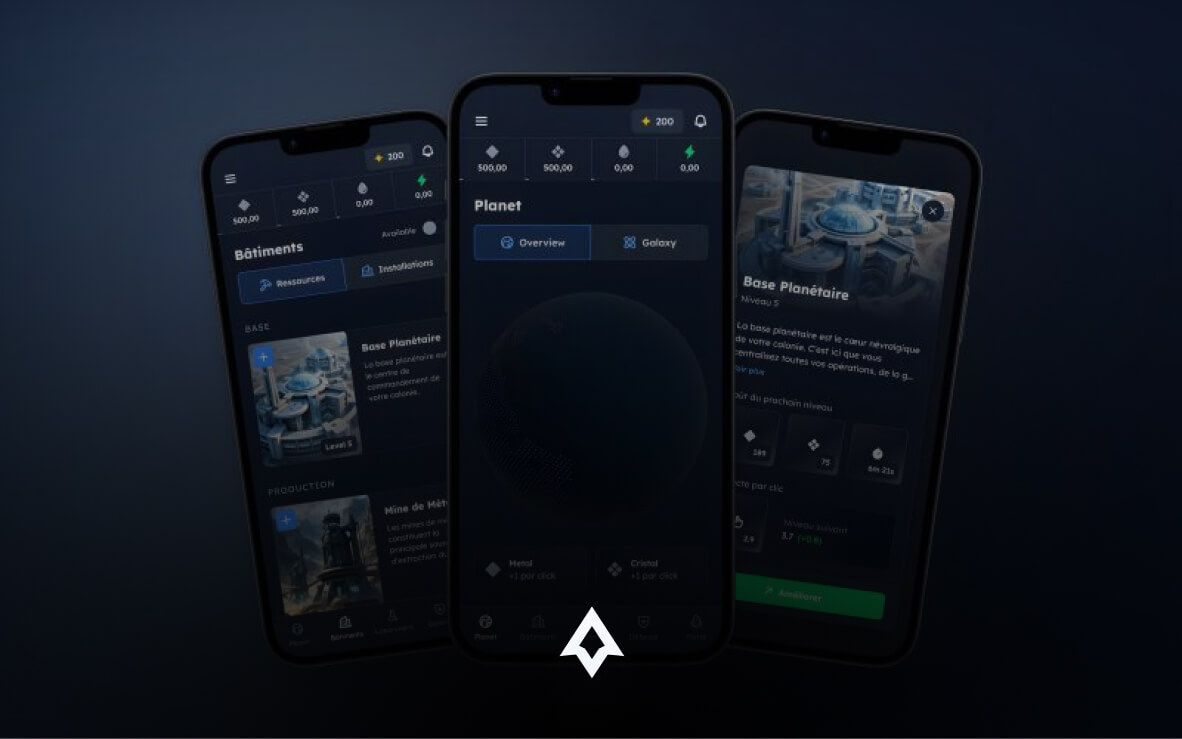
Dynasty Nova is the missing link between nostalgia and modernity. Created by an independent designer, the game revisits OGame's foundations — economy, construction, exploration — but transposes them into a smooth, contemporary interface.
Dynasty Nova opened its first public server on 26 September 2026: the game is free, plays on desktop and mobile, and shields every new player from attacks for 7 days.
Design and UX analysis
Everything here is designed according to design system principles: modern typography, balanced contrasts, micro-animations and intuitive navigation.
The 3D planet slowly rotating at the center of the screen becomes a symbol: a visual and emotional anchor point.
Dynasty Nova demonstrates that the future of the PBBG lies in the fusion of aesthetics and user experience.
Every element reflects a designer's thinking: readability, hierarchy and overall consistency.
Conclusion: The Return of Persistent Worlds, 2026 Edition
Twenty years after OGame, browser-based space games are being reborn in a more accomplished form. They have traded nostalgia for visual maturity and UX rigor.
DarkOrbit keeps the veteran's charm, Astro Empires the analytical purity, Starborne the spectacular ambition, Vega Conflict the mobile adaptability, and Dynasty Nova — the elegance of the design system.
In 2026, the browser is no longer a constraint but a canvas for independent designers and developers.
Where AAA titles bet on power, PBBGs bet on clarity, readability and persistence.
The future of the genre will be written less with 3D engines than with ideas, thoughtful design, and that ability to make space — once again — fascinating.
Useful links
OGame
DarkOrbit Reloaded
Astro Empires
Starborne: Sovereign Space
Vega Conflict
Dynasty Nova