Introduction
In a constantly evolving market, a company's survival and success depend on its ability to innovate and adapt. InVision is a striking example of this. This UX design giant reached the heights of success before falling dramatically.
This fall teaches us crucial lessons about the importance of continuous innovation and adapting to market changes. In this article, we will take a closer look at the factors that led to InVision's downfall and the lessons companies can learn from it.
Background
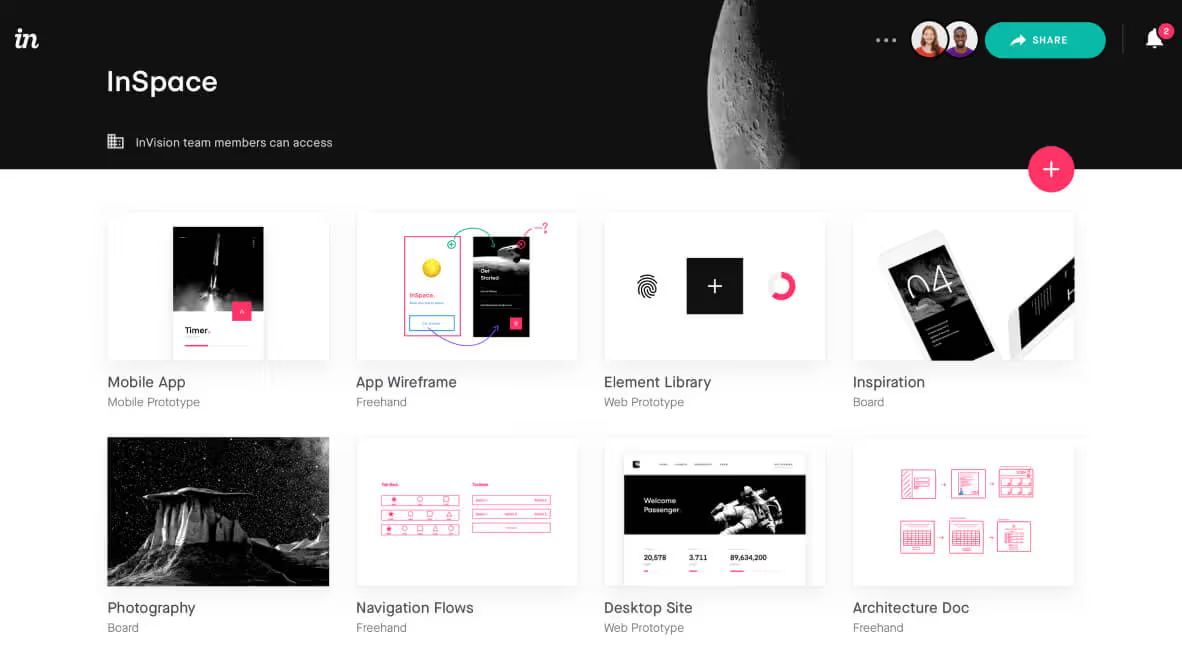
Founded in 2011, InVision was a major leader in the field of UX design, revolutionizing the way designers create interactive prototypes. Its intuitive platform became an essential tool for many professionals, but despite its initial success, InVision ultimately experienced a dramatic decline.
This fall can be attributed to various factors, notably the emergence of competitors such as Figma and Adobe XD, as well as internal strategic mistakes.
InVision's rise
A METEORIC RISE TO POWER
From its very beginnings, InVision established itself as a benchmark for creating interactive prototypes. Its intuitive and user-friendly platform quickly caught the attention of design professionals, who rapidly adopted the tool for its ability to simplify complex processes.
COLLABORATION WITH SKETCH
The strategic partnership with Sketch was a major turning point for InVision. This integration allowed users to enjoy a smooth and consistent design experience, thereby reinforcing InVision's position as a market leader and encouraging widespread adoption of the platform.
The emergence of competitors
THE ARRIVAL OF FIGMA AND ADOBE XD
Despite its initial dominance, InVision faced the emergence of formidable competitors such as Figma and Adobe XD. These platforms brought major innovations to the field of UX design, offering advanced features and seamless integration with other design tools.
IMPACT ON INVISION
The arrival of these competitors gradually eroded InVision's position in the market. Users were won over by the more advanced features and the flexibility offered by these alternatives, which led to a drop in demand for InVision's services and a decline in its market share.
InVision's strategic mistakes
LACK OF RESPONSIVENESS TO USER NEEDS
Despite the growing signs of increased competition, InVision was slow to respond to the changing needs of its users. Requests for new features and improvements were often ignored or handled slowly, which led to frustration and customer defection.
DELAYS IN ROLLING OUT FEATURES
Delays in delivering key features also hurt InVision's competitiveness. Unkept promises and extended development timelines contributed to the erosion of user trust and the loss of market share.
Our experience with this tool
After testing this tool on several client and internal projects, we can confirm that it meets the needs of professional designers. Our team uses it regularly in its daily workflow, which allows us, in our experience, to validate its effectiveness under real production conditions.
Points tested in detail:
- Performance on large files (500+ frames)
- Compatibility with complex design systems
- Stability during intensive use
- Integration into a team workflow
Points to watch (tested in real conditions)
In the interest of transparency, here are the limitations we identified during our tests:
- Processing time that may be longer on very large files
- Requires a stable internet connection for certain features
- Learning curve for beginner users
Conclusion
The fall of InVision highlights the importance of continuous innovation and listening to users in order to stay competitive in a constantly evolving market. Companies must learn from InVision's mistakes and adopt an approach centered on agility and adaptation to thrive in a competitive landscape.
By drawing lessons from this story, companies can avoid the pitfalls that led to InVision's downfall and build resilient, sustainable businesses in the world of design and technology.