Introduction
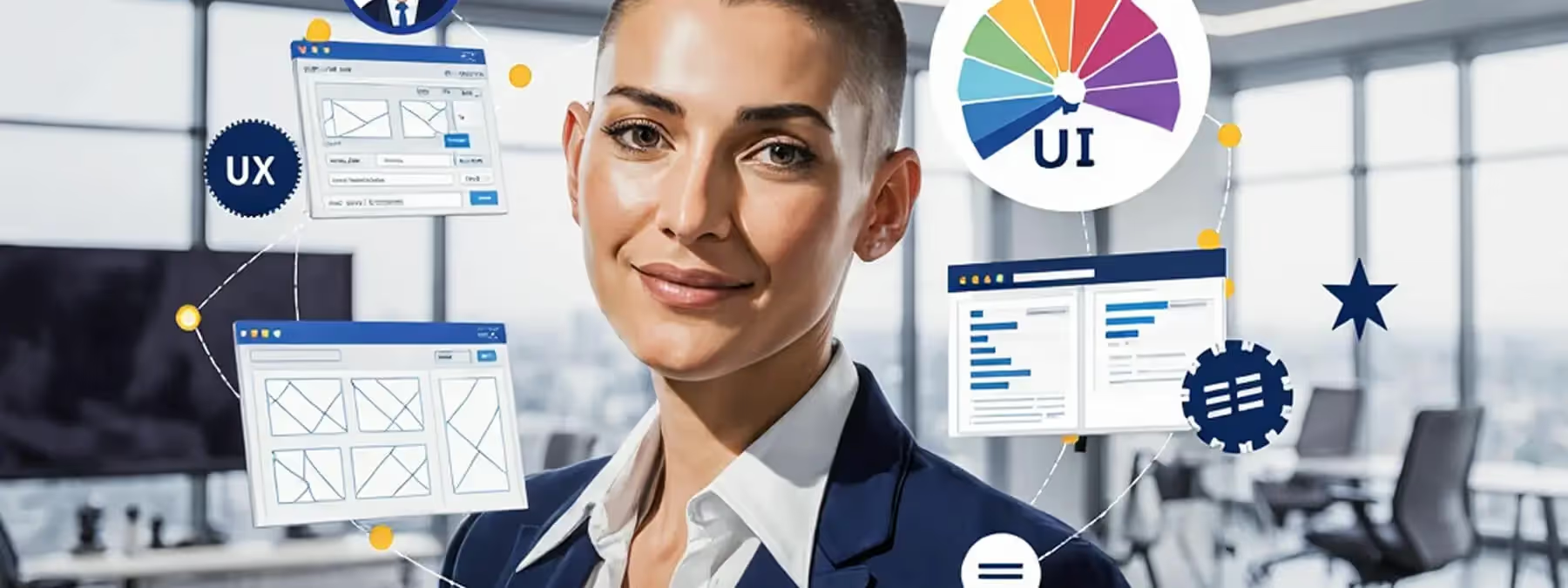
For several months now, job offers in the design field seem to converge on the same profile: senior "product" designers capable of covering both UX and UI aspects. This trend marks a tightening of the market and raises questions among professionals who, until recently, saw multiplying demands for highly specialized experts.
With the economic situation and the need for companies to optimize their budgets, are we witnessing a return of "Swiss Army knife" profiles and technical designers? Here are some reflections based on my experience and observations.
Context
From Specialist to Versatile Profile
A few years ago, recruiters favored specialists (UX Researcher, UI Designer...). Today, job offers increasingly highlight "product designer" or "senior UX/UI" profiles, asking a single person to master a wide range of skills, much like the web designers of early internet days who designed and coded.
Versatility Driven by Budget
This evolution is partly explained by tighter budgets that push companies to hire less, but with more generalist profiles. However, the market is not limited to this trend: experts remain essential for complex projects, such as in-depth user research or accessibility.
Technical Designers
The Rise of Tech-Savvy Profiles
A new type of designer is emerging quietly: the UI designer with strong technical affinities. Some of them master advanced prototyping tools, no-code, or even vibes coding to create interactive prototypes. The democratization of generative AI and code assistants opens new possibilities for them, such as image generation or task automation.
A Lack of Recognition
Despite the usefulness of these skills, they are rarely mentioned in job offers. The market seeks versatile UX/UI designers, but overlooks "tech UI designers" who are nonetheless capable of creating complex prototypes and communicating with developers. This lack of recognition could hinder the natural evolution of the profession toward better collaboration between design and development.
Personal Account
The Hybrid Profile: Design and Technology
As a senior UI designer, I have specialized in design systems while cultivating a strong appetite for technology. Although I am not a developer, my curiosity drives me to understand how code works and to explore tools like vibes coding, which allows me, based on our experience, to create interactive prototypes and open dialogue with development teams.
A Profile Undervalued in the Market
Despite the advantages this versatility brings to projects, I notice that job offers rarely value this "technical layer". We search for skills in product design, user research, and interface design, but the ability to communicate with developers and use technical tools is often overlooked. Similarly, mentions of AI in job offers remain quite timid.
Recognizing Tech-Design Profiles
A Bridge Between Design and Technology
The evolution of the designer profession goes through better harmonization between design and technology. Companies have much to gain by recognizing and hiring hybrid profiles, capable of orchestrating the product vision, communicating effectively with developers, and leveraging new tools like no-code or generative AI.
An Essential and Complementary Role
These cross-functional profiles do not replace experts — who remain essential for highly specialized domains — but they enrich teams. They act as a true link between research, design, and implementation, thereby streamlining processes and enabling more effective innovation.
Conclusion
The design market is transforming and seems to be rediscovering the value of hybrid profiles. Faced with tight budgets and increasingly accessible technologies, designers must juggle between UX research, UI creation, and technical understanding.
My wish is to see better recognition of these cross-cutting skills, which enable pushing innovation and project efficiency further. In the meantime, let's stay curious, continue learning and sharing our experiences, without yielding to overly formatted or sensationalist discourse: the important thing is to build lasting bridges between design, product, and technology.