Introduction
The world of software development has undergone a revolution in recent years with the emergence of two innovative approaches: Low-Code and No-Code. These methodologies have been game changers by simplifying application creation, but they present significant differences that can influence the choice of the best approach for a given project.
In this article, we will dive deep into Low-Code and No-Code, explore their distinctive characteristics, and examine the scenarios in which each one excels. Whether you are an experienced developer or have never written a line of code, this comparison will help you make informed decisions for your future software development projects.
Low-code: a semi-automated approach
Low-Code is a development approach that, in our experience, lets you build applications using a minimum of manual code. Here are some key characteristics of Low-Code
REQUIRED LEVEL OF TECHNICAL EXPERTISE
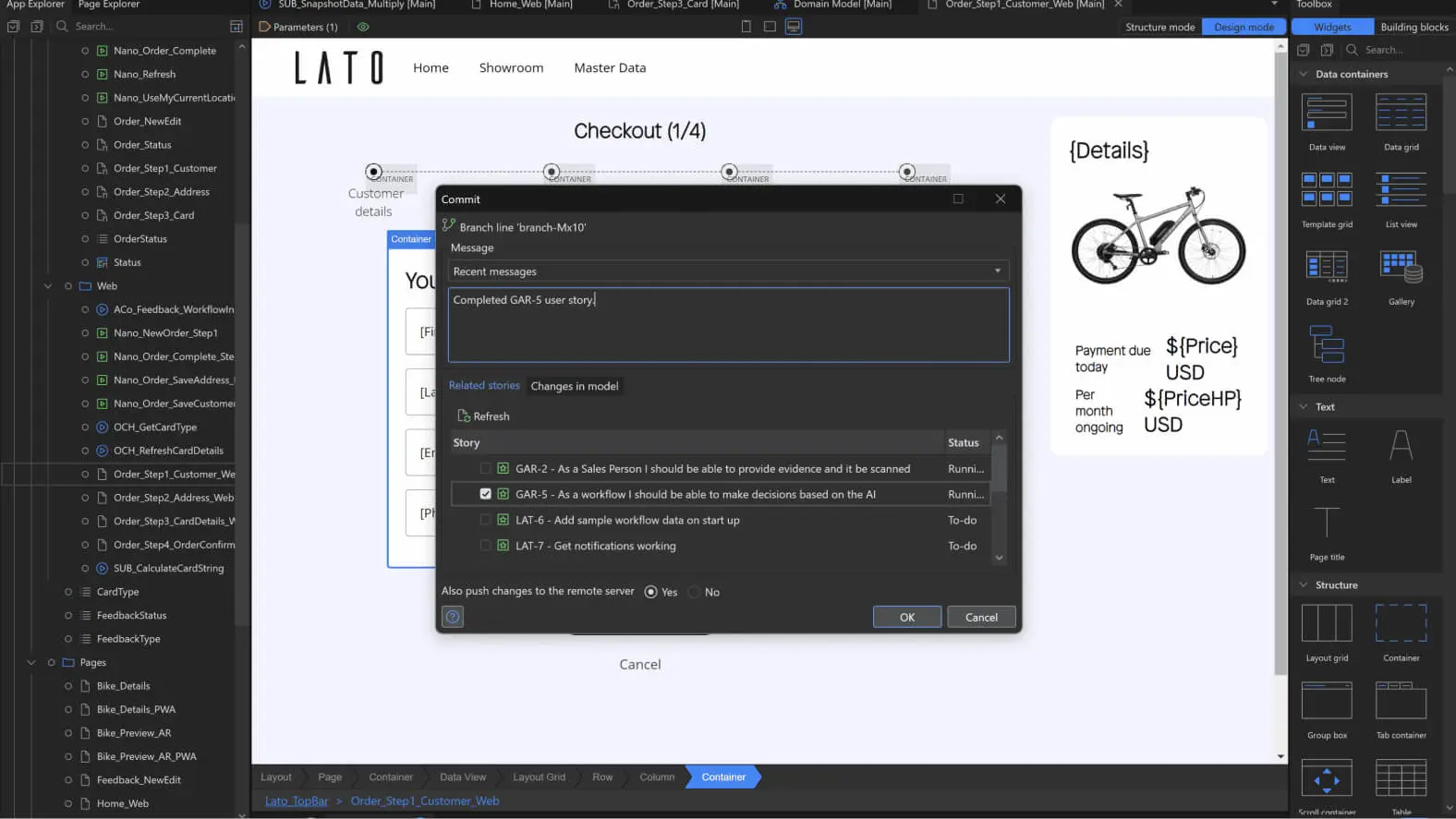
Low-Code requires a basic understanding of programming, which means developers must grasp fundamental concepts such as variables, loops and conditions. However, unlike traditional coding, they are not required to master a specific programming language. This approach lowers the barrier to entry for developers and makes it easier to adopt Low-Code within teams.
CUSTOMIZATION AND FLEXIBILITY
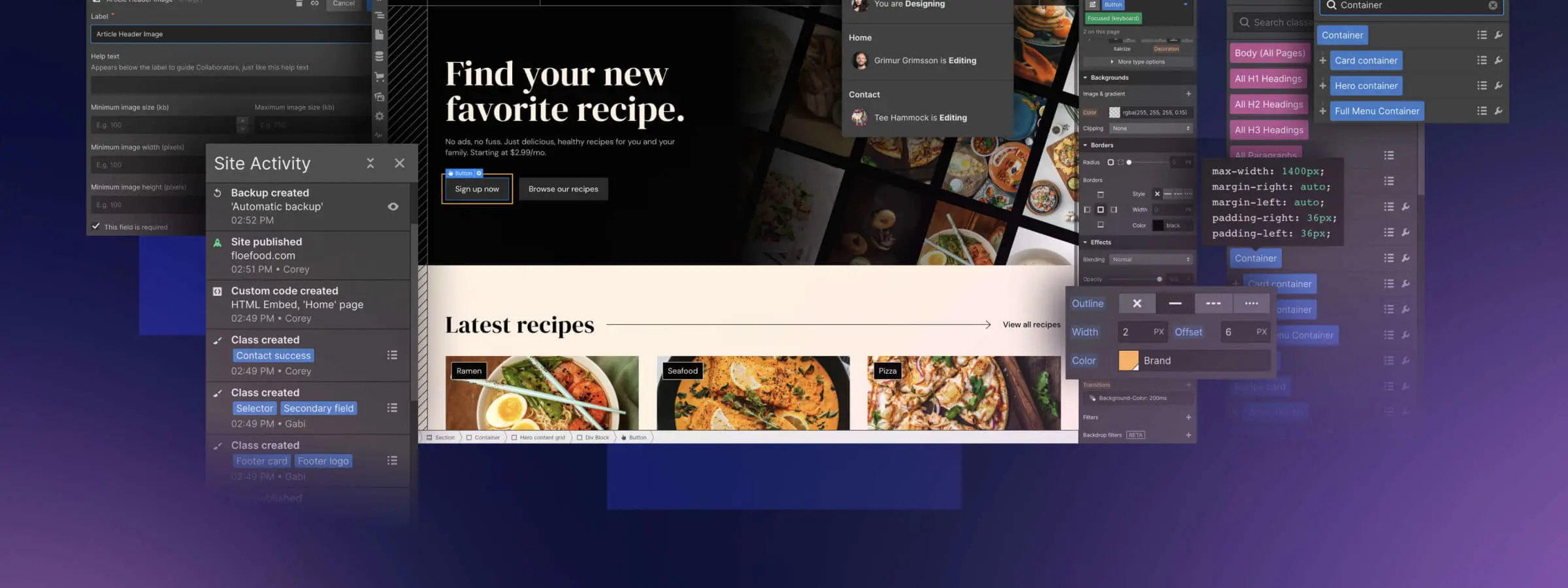
Low-Code offers a high degree of customization thanks to the ability to configure specific features. For example, a company can create a project management application using a Low-Code platform, then adjust the user interface, the workflows and the data fields to precisely match its internal needs. This allows considerable adaptability to the changing needs of businesses.
COMPLEXITY OF ACHIEVABLE PROJECTS
The versatility of Low-Code makes it a solution suited to a wide range of projects. It can be used to develop relatively simple applications, such as online forms, survey apps or task-tracking tools. However, its ability to handle large-scale projects should not be underestimated.
Companies can build complete enterprise applications, such as human resources management systems or supply chain management solutions, using Low-Code.
DEVELOPMENT TIME AND COSTS
Low-Code considerably speeds up development by automating many tasks, such as building user interfaces and managing the database. This automation shortens development timelines, which is particularly advantageous for companies looking to bring new products or services to market quickly.
Moreover, although the initial implementation of a Low-Code platform can represent an investment, the long-term savings resulting from faster development and reduced maintenance costs can improve overall profitability.
No-code: an approach accessible to everyone
No-Code, for its part, aims to enable people without programming skills to create applications. Here are some characteristics of No-Code
REQUIRED LEVEL OF TECHNICAL EXPERTISE
No-Code is an approach that completely eliminates the need for programming skills. This characteristic makes it truly accessible to everyone, even those who have never written a line of code in their lives.
No-Code tools are specifically designed to be user-friendly and intuitive, which means anyone can use them without needing extensive technical training. This accessibility broadens the range of people able to create applications, fostering innovation and efficiency across a variety of businesses.
CUSTOMIZATION AND FLEXIBILITY
Compared to Low-Code, No-Code generally offers less customization. It often relies on pre-built templates and components, which limits customization to the predefined options provided by the tool. However, this simplicity is an advantage for simpler projects, where complex customization is not necessary.
Companies looking to quickly create standardized solutions, such as websites, task management apps or online forms, can take advantage of the efficiency offered by No-Code, even if it means accepting customization limits.
COMPLEXITY OF ACHIEVABLE PROJECTS
No-Code is particularly well suited to relatively simple projects. It excels at creating websites, task management apps, online forms, blogs, and other basic solutions.
It is a perfect fit for small businesses, startups and entrepreneurs who want to set up solutions quickly without having to hire a developer or a development team. However, it can show its limits for more complex projects requiring advanced features or deep integration with other systems.
DEVELOPMENT TIME AND COSTS
No-Code drastically shortens development time since it removes the need to hire developers or a specialized team: a functional app can be assembled in days rather than weeks.
This translates into lower upfront costs for straightforward projects, since there is no ongoing coding work or advanced technical maintenance to pay for — a saving that comes with the customization trade-offs described above.
Comparing the key differences
Now that we understand the basics of Low-Code and No-Code, let's examine the key differences between these two approaches.
LEVEL OF TECHNICAL EXPERTISE
Low-Code requires a certain level of programming expertise, which enables developers to build more complex and customized applications. This expertise includes an understanding of data structures, algorithms, and programming concepts.
Low-Code is suited to projects requiring specific features or in-depth customization, since developers can step in to code tailor-made solutions. No-Code, on the other hand, is accessible to everyone, regardless of their technical skills, which makes it an ideal option for simple projects that do not require deep programming knowledge.
CUSTOMIZATION
Low-Code offers more advanced customization thanks to the ability to code specific features using traditional programming languages. This makes it appropriate for complex projects requiring tailor-made features or deep integrations with other systems.
No-Code, on the other hand, generally relies on pre-built templates and components, which limits customization to the options provided by the tool. Although this limitation can be constraining for projects that are demanding in terms of customization, it makes for faster development on simpler projects where complex customization is not necessary.
COMPLEXITY OF PROJECTS
Low-Code is capable of successfully handling complex projects, including complete enterprise applications and integrated systems. For example, a large company's supply chain management system, which requires custom features and close integration with other systems, would be better suited to Low-Code.
No-Code, on the other hand, is more appropriate for simple projects, such as creating websites, task management apps or online forms. It is a perfect fit for small businesses, startups and entrepreneurs looking to quickly create solutions without having to hire a developer.
DEVELOPMENT TIME AND COSTS
No-Code generally allows for faster and cheaper development, since it eliminates the need to hire developers or development teams. This makes it an attractive option for projects with limited budgets or tight deadlines.
Low-Code, on the other hand, can offer more control over development, but this may come with a potentially higher cost due to the need for technical skills. The choice between the two approaches should therefore be guided by priorities in terms of cost, timeline and control.
APPROPRIATE USE CASES
The choice between Low-Code and No-Code depends on the specific needs of the project. Simple, fast projects are ideal for No-Code, as it allows for quick implementation without technical expertise.
More complex projects requiring in-depth customization, specific features or complex integrations, on the other hand, can benefit from Low-Code to meet these requirements. It is important to carefully assess the needs of the project, the skills of the team and budget constraints to make an informed decision between Low-Code and No-Code.
Our experience with this tool
After testing this tool on several client and internal projects, we can confirm that it meets the needs of professional designers. Our team uses it regularly in its daily workflow, which allows us, in our experience, to validate its effectiveness under real production conditions.
Aspects tested in detail:
- Performance on large files (500+ frames)
- Compatibility with complex design systems
- Stability during intensive use
- Integration into a team workflow
Conclusion
In conclusion, the choice between Low-Code and No-Code depends above all on the specific needs of your project. Low-Code offers in-depth customization and increased flexibility for complex projects, while No-Code shines with its simplicity and speed of development for simpler projects. It is essential to take into account the level of technical expertise available, the complexity of the project, the budget and the deadlines in order to make the decision that suits you best.
Both approaches offer distinct advantages, but an informed choice between Low-Code and No-Code will ensure that your software project meets its goals in a way that is effective, efficient and aligned with your specific requirements. So, whether your next project is a sophisticated enterprise application or a personal website, choose wisely between Low-Code and No-Code to succeed on your software development journey.