Introduction

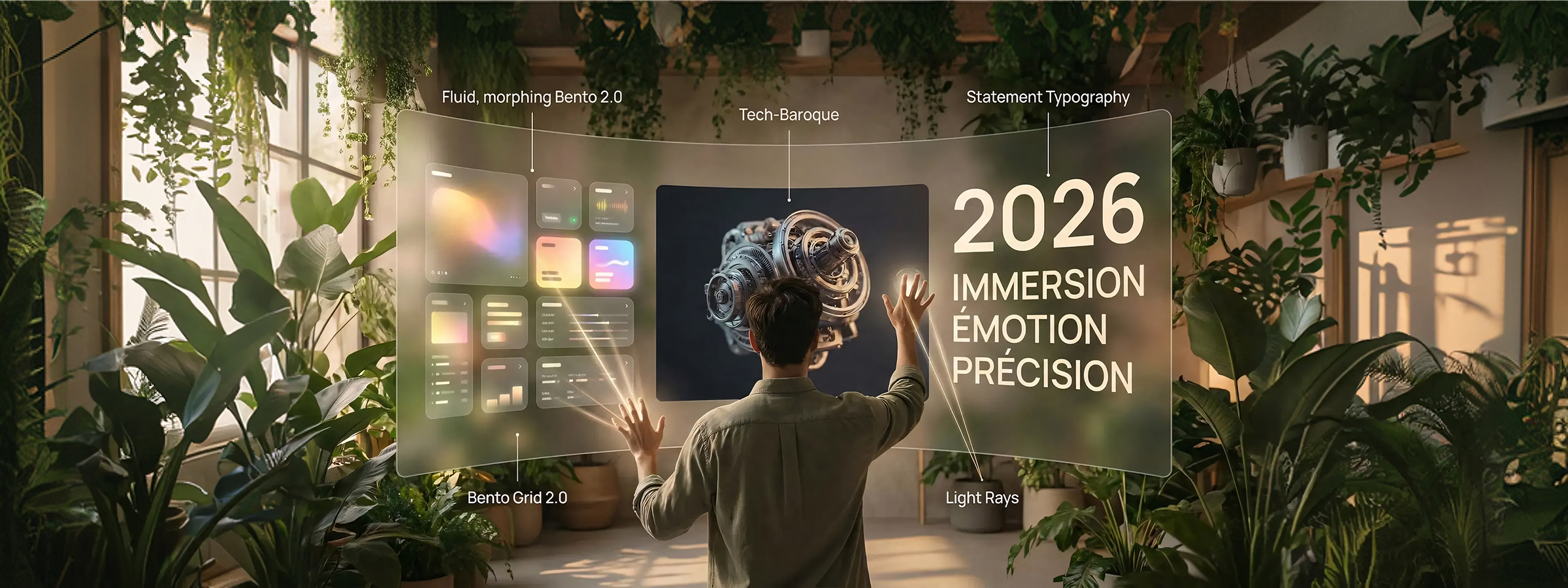
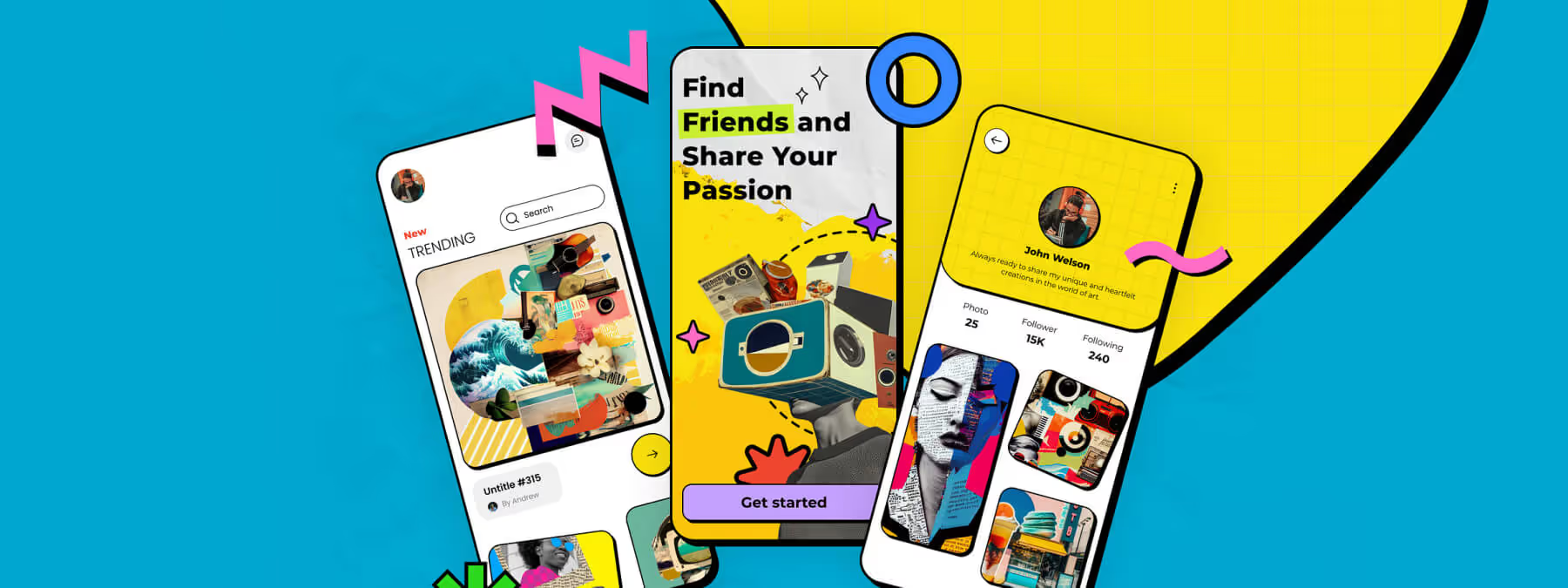
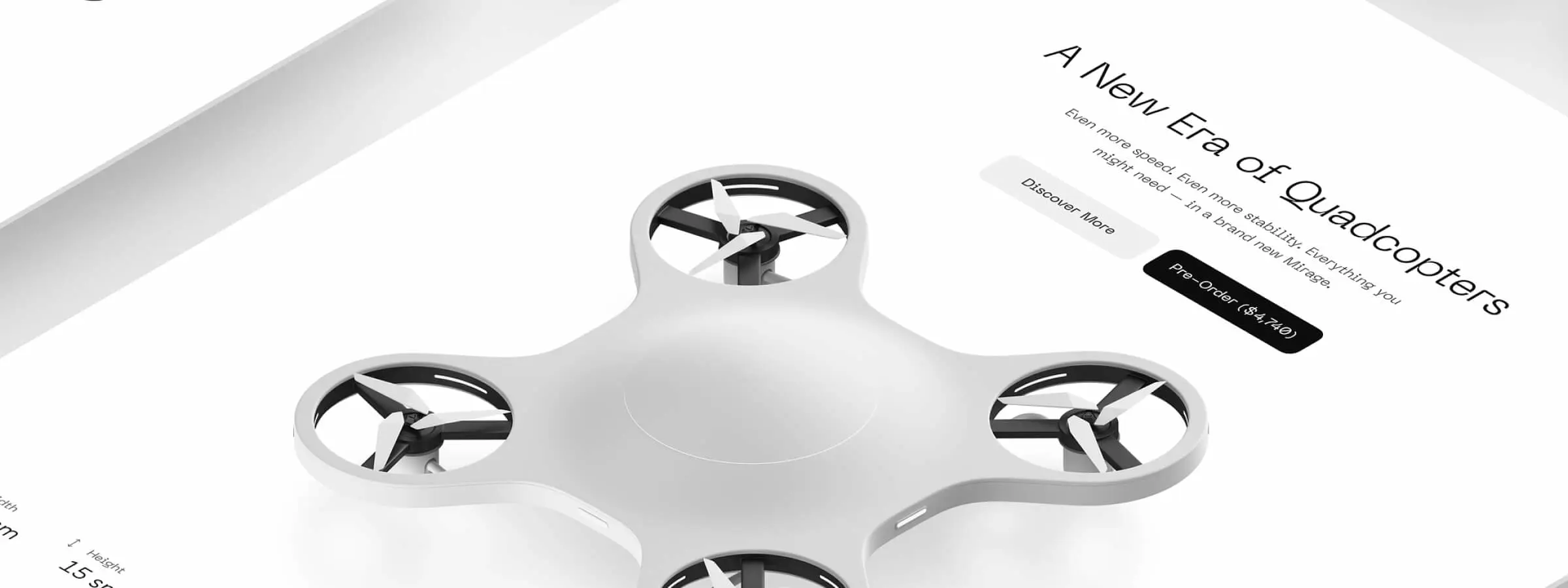
The user interface (UI) design industry is constantly evolving, shaped by the emergence of new technologies and innovative design approaches. These trends have a profound impact on how we interact with digital interfaces, influencing the future of user experience. In this article, we'll explore current trends in UI design, examining their implications and influence on the world of design.
a computer screenshot
Antoine Plu

Shadows and Depth in UI Design: Creating an Immersive Experience

INTRODUCTION

The skillful use of shadows and depth has become a major trend in UI design, aimed at giving a new dimension to the user interface. This approach relies on the subtle manipulation of shadows to guide user attention and create an immersive experience. In this section, we'll explore the shadow and depth trend in detail, its foundations, and its impact on interface design.

AN IN-DEPTH PRESENTATION OF THE TREND

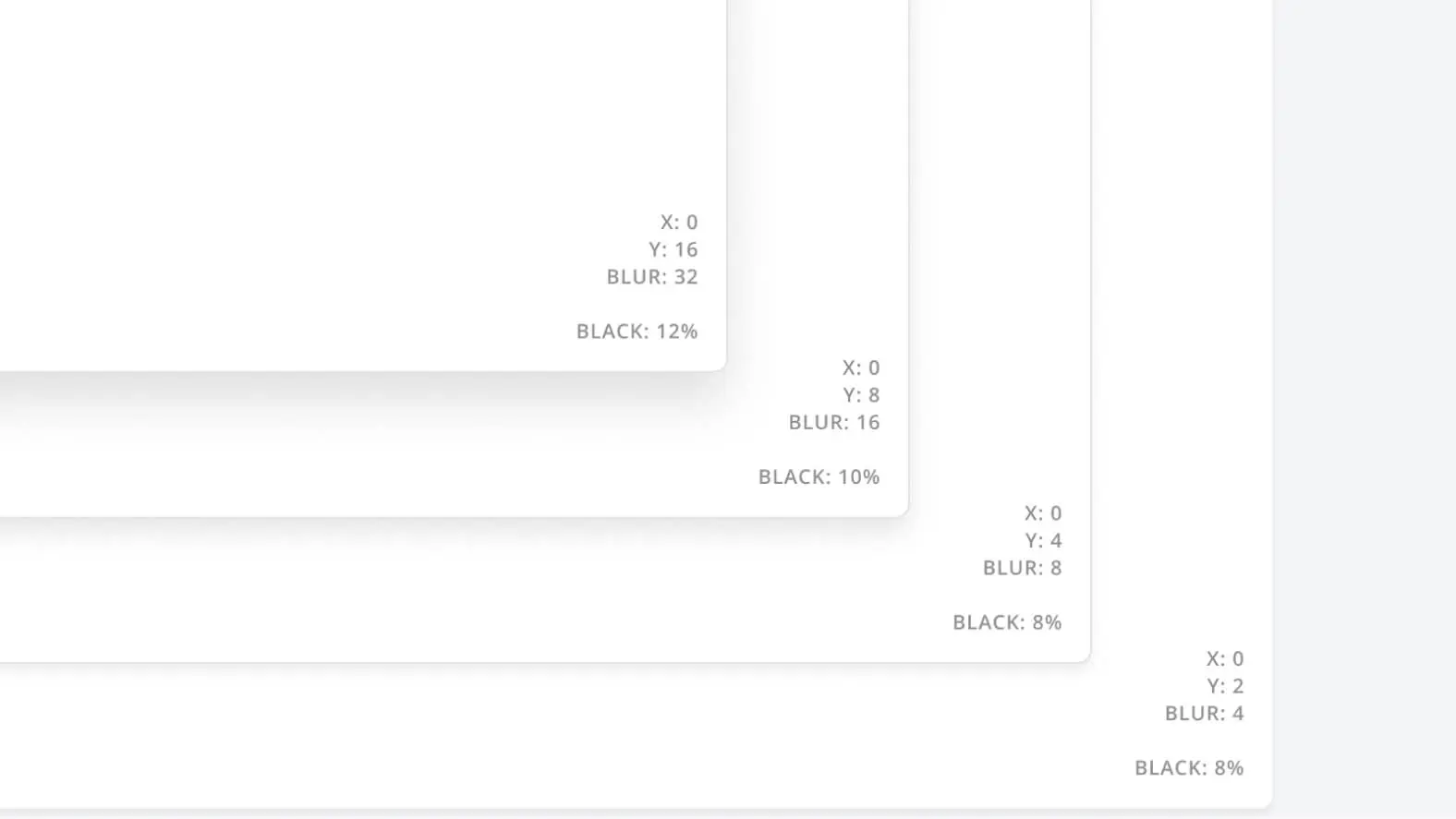
Shadows and depth are key elements of this trend, used to create an illusion of relief and make the interface more visually appealing. By playing with shadows, designers are able to add volume to elements, making them stand out from the screen for a more immersive user experience.

USING SHADOWS TO CREATE VISUAL DEPTH

Shadows play an essential role in this trend by helping to define the visual hierarchy of interface elements. Soft shadows, when properly applied, can give the impression that some elements are in the foreground while others are in the background. This subtle trick guides the user's eye and reinforces understanding of the interface layout.

HOW SHADOWING IMPROVES NAVIGATION AND USER EXPERIENCE

The strategic use of shadowing goes beyond aesthetics, also contributing to improved navigation and user experience. Designers can leverage shadowing to visually indicate which elements are interactive and highlight areas of the interface where user action is required. In this way, shadowing becomes a powerful tool for guiding users through the interface intuitively.

EXAMPLES OF APPLICATIONS THAT USE THIS TREND SUCCESSFULLY

Several renowned applications have successfully adopted shadows and depth to enhance the aesthetics of their user interfaces. For example, Spotify, the popular music streaming platform, skillfully uses shadowing to highlight interactive elements such as play and pause buttons, creating an immersive experience for users while improving usability. Similarly, Airbnb, the accommodation booking platform, uses shadowing to add volume to property images, helping users visualize their future stay more realistically.

These examples demonstrate how shadows and depth can be used effectively to enhance user experience and make interfaces more visually appealing.

a close-up view of a keyboard
Conceptzilla

Our Experience with This Approach

After testing this approach on several client and internal projects, we can confirm that it meets the needs of professional designers. Our team uses it regularly in our daily workflow, which allows us, based on our experience, to validate its effectiveness in real-world production conditions.

Points tested in detail:

  • Performance on large files (500+ frames)
  • Compatibility with complex design systems
  • Stability during intensive use
  • Integration into team workflows

Points to Consider (tested in real-world conditions)

In the interest of transparency, here are the limitations we identified during our tests:

  • Processing time can be extended on very large files
  • Requires a stable internet connection for certain features
  • Learning curve for beginners

Conclusion

In conclusion, the trend of shadows and depth in UI design offers an immersive and attractive experience. Shadows guide the user and improve navigation. Examples like Spotify and Airbnb demonstrate its effectiveness. However, its use requires an understanding of design principles. This trend remains a field of creative exploration in the UI design industry, aimed at making interfaces more captivating and intuitive. Shadows and depth are an essential element in the toolkit of interface designers, transforming how we interact with digital technology.


Certains liens sont des liens d'affiliation, si vous effectuez un achat auprès de ceux-ci, nous pouvons percevoir une commission.