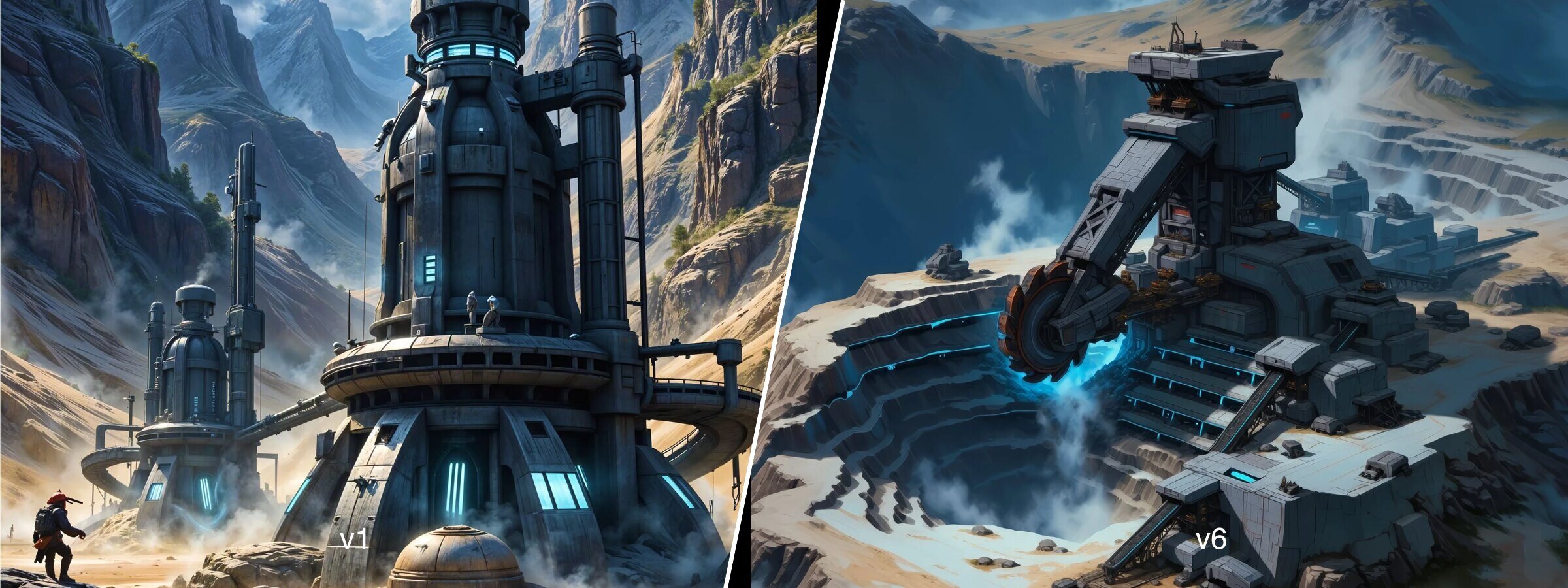
Introduction: bringing a space-game myth back to life
Born as a closed beta, Dynasty Nova is an independent project that draws its inspiration from OGame, the space strategy game that became iconic in the 2000s. The goal: to revive the magic of the genre while adapting it to modern usage, a smoother experience, and a player-centered design.
Designed by a designer passionate about video games and interactive experiences, Dynasty Nova is intended to be as much a tribute as an experimental laboratory. Here, nostalgia gives way to a UX-first approach, where each planet becomes a living, evolving world.
Context: the legacy of OGame and the quest for a calmer experience
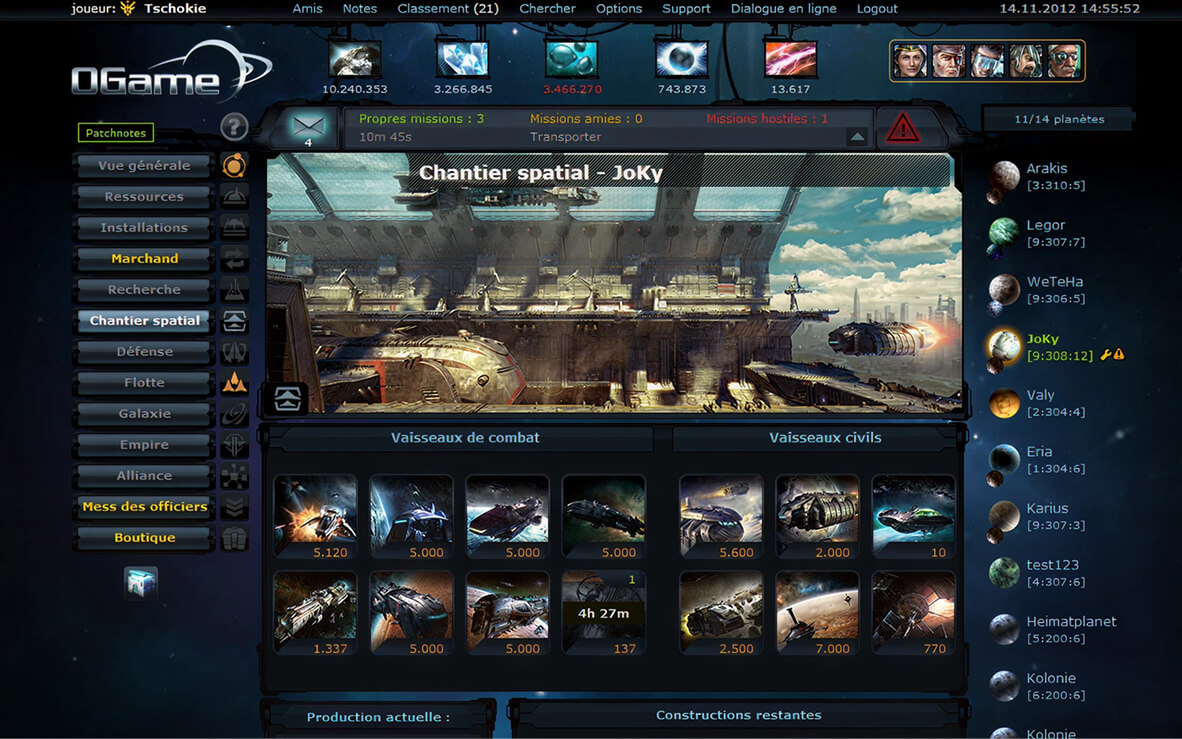
OGame: a landmark of browser-based gaming
In the early 2000s, OGame offered a revolutionary concept: building a persistent space empire from your browser. Resource management, colonization, alliances, and real-time strategic battles made this game a benchmark of the PBBG (Persistent Browser-Based Game) genre.
Its minimalist interface and its slow but addictive gameplay marked generations of players.
A shared frustration: playing without suffering
Yet, despite its charm, OGame imposed constant tension. Players focused on management and building struggled to progress without enduring repeated attacks. For many, this competitive dynamic gave way to lasting frustration.
It was from this observation that the idea of Dynasty Nova was born: a calmer, more personal, more immersive space strategy game.
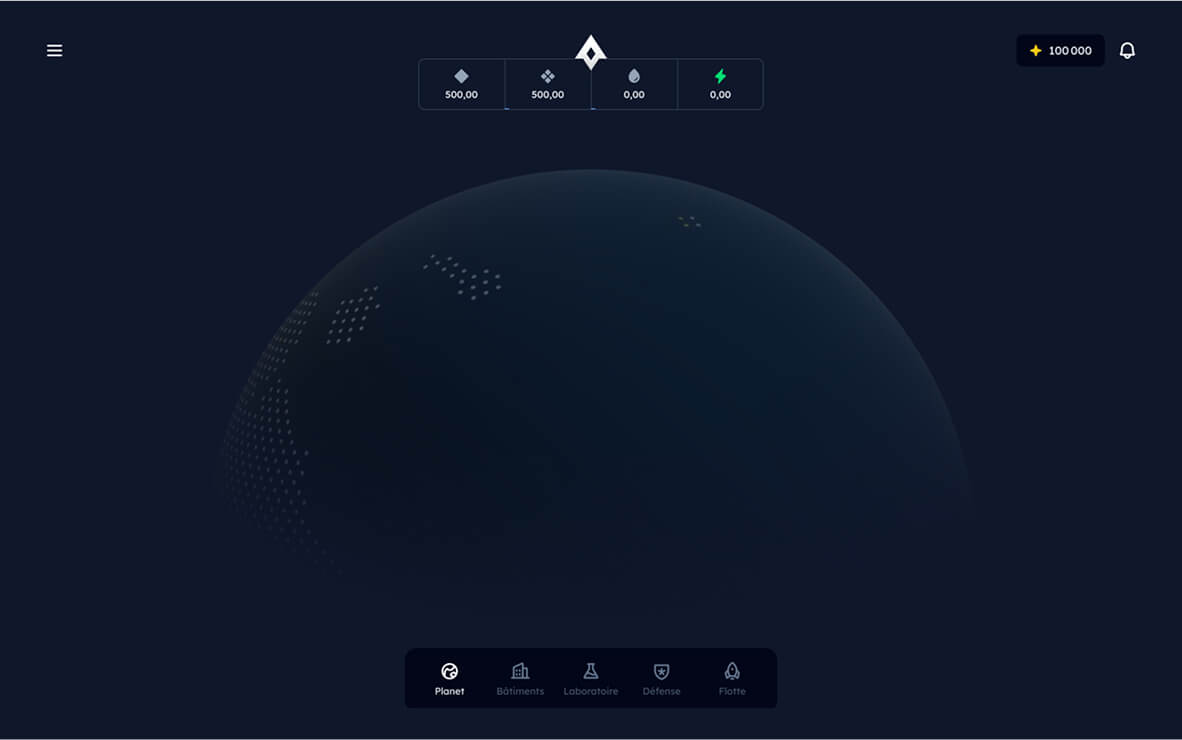
Dynasty Nova: a designer's project for modern players
Goal: a serene and immersive gaming experience
Dynasty Nova takes the fundamentals of OGame — management, expansion, diplomacy — but enriches them with a design-first approach. The aim: to let everyone play at their own pace, without constraint or forced competition.
The game is built on three main pillars:
- Smart solo mode with adaptive bots that adjust the level of challenge.
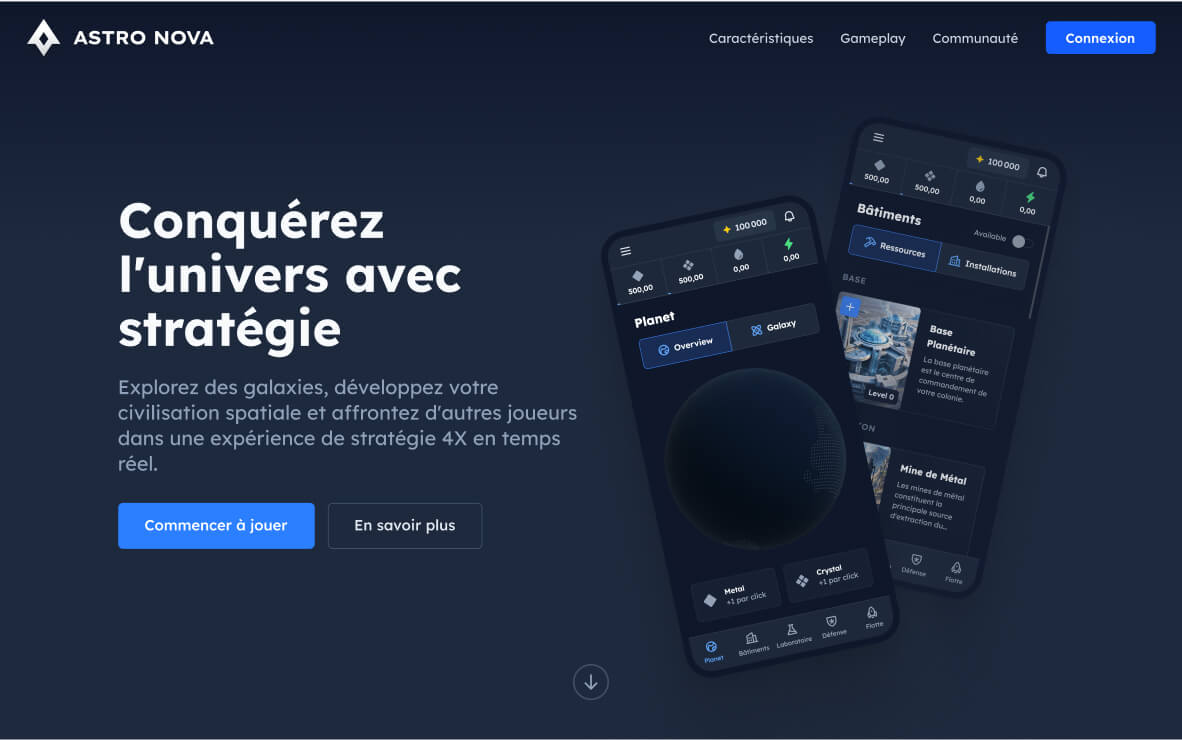
- Immersive, 3D interface: animated planets, natural interactions, smooth visual feedback.
- Universal accessibility: playable directly from a web browser, on desktop or mobile.
The goal is clear: to reinvent the browser-based strategy game for the mobile era, while preserving the tactical depth of the genre.
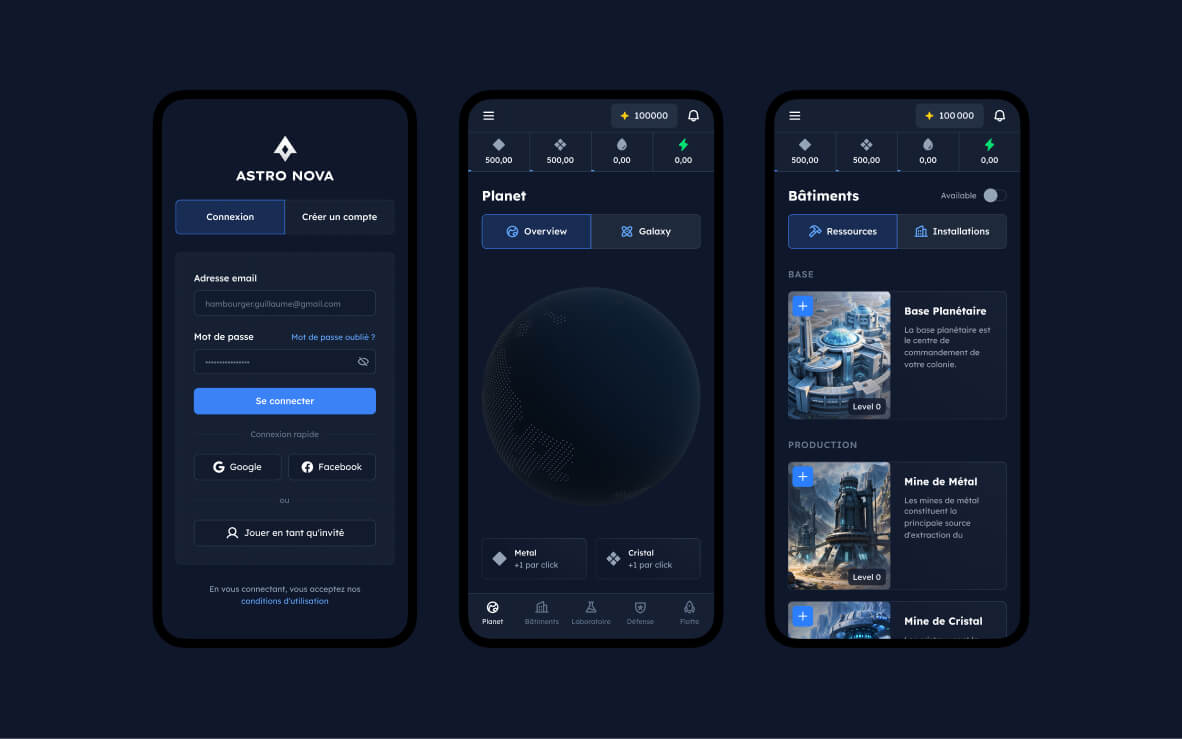
A planet as the central interface: the visual experience at the heart of the game
Instead of a static data dashboard, Dynasty Nova places the planet at the center of the experience.
Inspired by the aesthetic of interactive globes (such as GitHub Universe), each planet rotates slowly, reacts to light, and evolves according to the player's actions.
The territories — oceans, continents, buildable zones — are procedurally generated, turning each game into a unique experience.
The player no longer manages a list, but inhabits a living world: each resource, each building, each point of light has a narrative and functional meaning.
Design & user experience: a UX-first approach
A design centered on clarity
Coming from interface design, Dynasty Nova's creator applies the fundamental principles of modern UX:
- Immediate readability of key information
- Modular navigation (side menu, dynamic planet, central content)
- Constant feedback to reinforce understanding of actions
This architecture, in our experience, makes it possible to guide the player intuitively, without a heavy tutorial, and to create a smooth and responsive experience suited to touch screens.
A graphic style between retro and modern
Visually, Dynasty Nova borrows from both minimalist pixel art and modern low-poly aesthetics.
Technical typefaces, subtle lighting effects, and dark tones create an immersive atmosphere while remaining accessible to modest machines.
Technology & development: an evolving sandbox
Dynasty Nova does not aim to compete with AAA productions, but to offer an evolving prototype, conceived as a testing ground.
- Frontend: React (JavaScript) for modularity.
- 3D: WebGL / Three.js for the interactive planets.
- Lightweight backend: JSON + local storage for the testing phase.
- Evolution: API and database planned for the public version.
Hosting remains deliberately lightweight, favoring responsiveness and collaboration through user feedback.
The game is currently available as a closed beta, accessible to those who wish to test and contribute to its development.
Why choose Dynasty Nova?
An alternative to OGame designed for 2025
While many OGame clones reproduce the same competitive mechanics, Dynasty Nova stands out through:
- A peaceful and introspective vision of the genre;
- An immersive and ergonomic design, made for visual comfort;
- Real cross-platform accessibility, with no installation.
Whether you are looking for a solo space strategy game, an alternative to OGame on Android, or simply a gentler web experience, Dynasty Nova is aimed at a new generation of players.
Conclusion: a design project above all
Dynasty Nova goes beyond the scope of a simple game.
It is an experimental design project, an exploration of what browser-based gaming can become again: a human, immersive, and aesthetic experience.
For those nostalgic for OGame, creators curious about UX, or players who want to build rather than destroy, Dynasty Nova offers a calm play space, centered on creativity and contemplation.
Useful links
Play Dynasty Nova
About OGame
Follow the project on LinkedIn
FAQ
Does OGame still exist in 2025?
Yes, OGame is still active and supported by a loyal community. Dynasty Nova is simply aimed at an audience looking for a more accessible and modern alternative.
Is there a mobile version of OGame?
Some adaptations exist, but few offer a smooth solo experience. Dynasty Nova fills this gap with a responsive web version, designed for mobile and tablet.
What is the best browser-based strategy game in 2025?
It depends on what you are looking for: for competition, OGame remains a benchmark; for relaxation, visual beauty, and exploration, Dynasty Nova stands out as an innovative alternative.