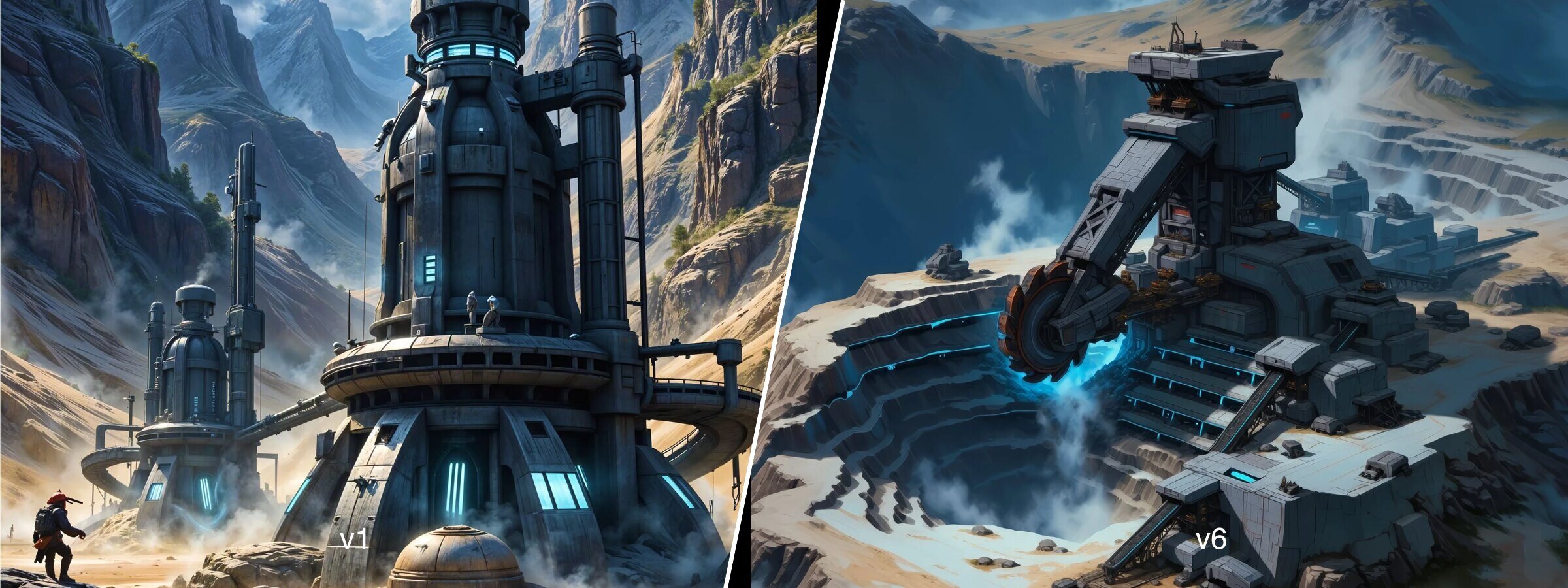
Introduction
Dynasty Nova is a project born out of personal frustration: watching OGame's mobile interface — once a benchmark — decline over the years. With the ambition of modernizing this experience, I launched Dynasty Nova, a personal project focused on design systems and mobile-first. The goal: to reinvent a smooth, touch-friendly and aesthetic user experience, in line with today's standards.
Context
OGAME'S LEGACY: A MODEL RUNNING OUT OF STEAM
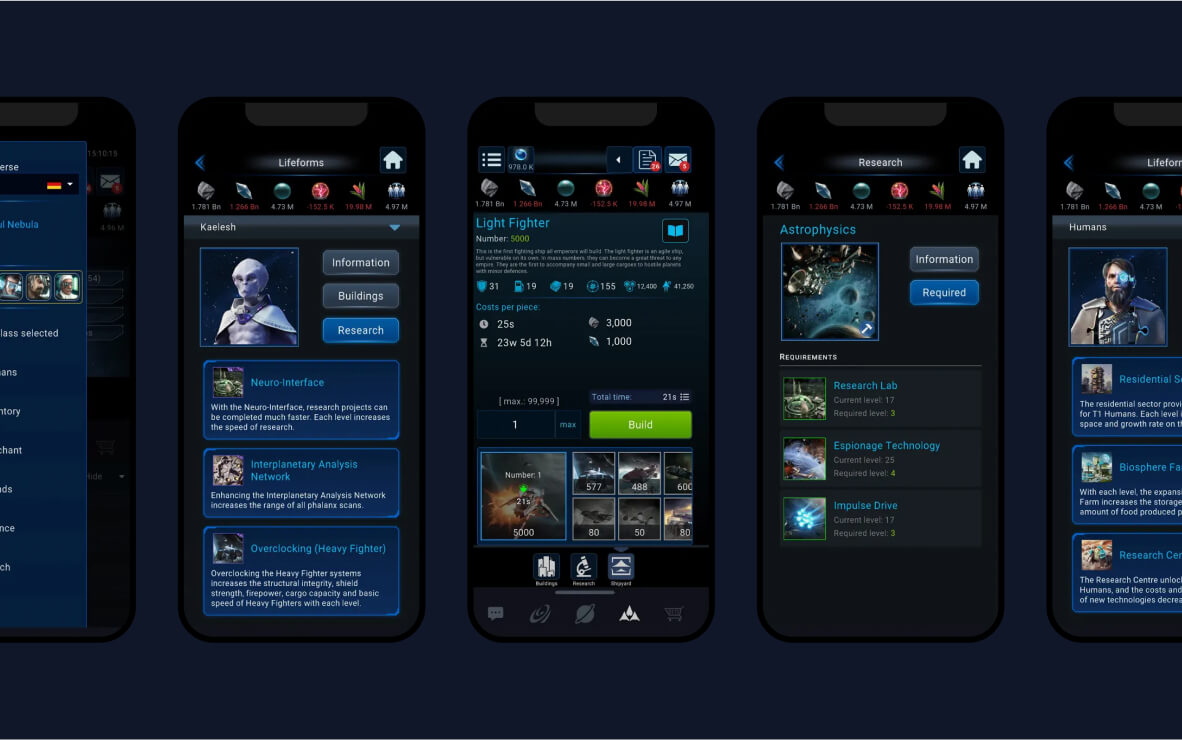
OGame left its mark on an entire generation thanks to its addictive gameplay and strategic depth. Yet its interface, originally designed for desktop, has barely evolved. The mobile version, a mere responsive adaptation, now suffers from a glaring lack of usability that hurts the user experience.
A NEED FOR MODERNITY: MOBILE-FIRST AS THE ANSWER
Faced with these limitations, Dynasty Nova takes the opposite approach: starting from mobile to deliver a native experience, designed from the ground up for touch use. This approach makes it possible, in our experience, to rethink interaction and navigation mechanics with particular attention paid to readability and fluidity.
Building a modern interface
A FULLY EMBRACED MOBILE-FIRST PHILOSOPHY
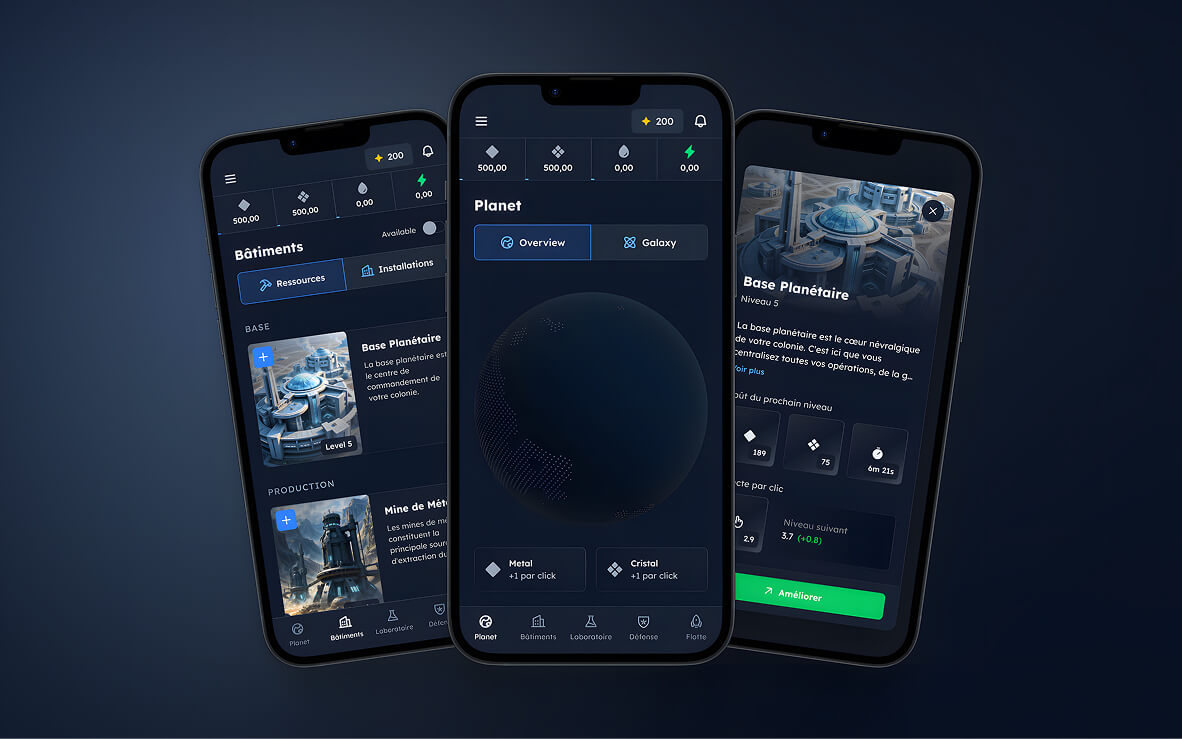
Dynasty Nova is not just responsive: everything is designed for a smooth mobile experience. Navigation relies on "card-based" components, intuitive modals and natural interactions that reinforce the feeling of using a native application rather than a simply compressed website.
TAILWIND CSS: THE DEVELOPMENT ACCELERATOR
To ensure speed and consistency, Tailwind CSS was the cornerstone of the project. Its utility classes allow great granularity in design (typography, colors, spacing), while ensuring perfect consistency thanks to a rigorously applied design system.
A structured design system for scalability
REUSABLE COMPONENTS: THE KEY TO CONSISTENCY
From the very beginning, the interface was built around modular components: buttons, cards, menus, tabs… Each element was designed to be easily reused, ensuring both speed of implementation and visual consistency across the entire project.
A STRONG VISUAL IDENTITY: PHOSPHOR ICONS AS A PILLAR
The choice of Phosphor Icons is no coincidence: this open-source library offers a wealth of icons with a uniform, clean style, perfectly suited to the space-themed universe of Dynasty Nova. This choice enables quick reading of information, essential for a management game.
From development to design
FROM CODE TO FIGMA: A STRATEGIC MOVE BACK
Unlike classic methods where the design system precedes the code, Dynasty Nova took the opposite path: the interface was first developed with Tailwind and Bolt, before being brought back into Figma via the HTML to Design plugin. This approach made it possible to refine the art direction after the fact, with a global, unified vision.
FORMALIZING THE FUNDAMENTALS: TYPOGRAPHY, PALETTES, COMPONENTS
Once in Figma, the entire graphic system was structured: color palettes, grids, typography, atomic components… This step helped stabilize the identity of Dynasty Nova while preparing the project's future extensions (building cards, research, defenses…).
Conclusion
Dynasty Nova is much more than a simple interface redesign: it is a manifesto for rethought design, where every decision is guided by the mobile user experience. By starting from touch, relying on modern tools like Tailwind and Figma, and structuring every element around a coherent design system, Dynasty Nova offers a new vision of management games — smoother, more elegant, better suited to contemporary uses.
USEFUL LINKS
Play Dynasty Nova
Tailwind CSS
Phosphor Icons
Figma
HTML to Design Plugin
OGame